Posts
I read Randy Pausch’s The Last Lecture when I was in college. In it, Randy talks about developing Alice and how it impacted his career and his views on teaching computer science to kids. At the time, I remembered thinking, “I should download and try it out.” But, I never did.
Fast forward seven years. I’ve spent the last two weeks playing in Alice, and I have to say, given my experience with Scratch, I wasn’t feeling too optimistic.
Spoiler alert: I liked Alice much, much better. I’ll continue after the video.
I said this in the video more than once, but I loved the editor. The staging area was great to set up camera angles and think through character movements before getting into the code. It really helped with my sequencing and thinking through algorithms I wanted to implement.
As with any piece of new software, I debugged a lot. I had to get used to the language the editor used as well as get used to the differences between “moveTo” and “moveToward.” They’re subtle, but important. But, what was nice about Alice is that it didn’t seem too complicated, no matter what I played with. The procedures and their layering in the methods window were intuitive and I had a good time playing with different settings to get the effect I wanted.
Alice and Scratch are very similar…the main difference being Alice uses a 3D environment and Scratch is 2D. That being said, I think I would tend to lean toward Alice as a first-exposure program for students because of the immersive environment and the ease of editing. You can step through staging into the programming, rather than diving into the programming and thinking about staging later. I also think seeing all of the available procedures for each object in the code editor is a huge stress reducer because it saves me clicks later.
There are times where I wish I could go back, rewind what happened, and listen again. Daydreamers, you know what I’m talking about. Even though it’s not in the official pillars of Flipped Learning, a reason I hear people flipping their instruction is so kids can pause, rewind, and re-watch a portion of the instruction. It sounds powerful, and it gives a great visual of students working hard on their notes, but it may not be as helpful as it initially sounds.
What does the research say?
A 2005 study focused on how students studied using video lectures. I know the technology in 2005 was far inferior to the on-demand video content we have today, but that particular point doesn’t really matter. What I want to focus on is the fact that there are some indications that pausing and rewinding content can be disruptive to the learning process (emphasis added).
Students tried to view an entire lecture in a single session; however, some discovered that pausing was necessary. All participants who interrupted viewing reported that pausing caused a serious problem which involved returning to the break point. Students reported that even though they returned to the precise point at which they stopped, they lost the context and didn’t immediately understand what followed.
The following example illustrates this point:
“A pause in watching video is worse than a break in reading a book, because I felt that I have no place to return to. I lost context.”
This is just one example of a more poignant point I’m trying to make – don’t distill the benefits of your methods down to one idea or another. Look at your strategies holistically and be able to explain how they work together to your students’ advantage.
There were interesting counterpoints to the above example in the same article:
Navigating the video backward and forward was difficult and disadvantageous for some students, whereas others found it easy and advantageous. Some examples:
“…it wasn’t easy. You sit in front of the computer for two hours and you can’t mark [content]. Rewinding is annoying.”
“…an advantage is that you can repeat something over and over, like I sometimes do when I read a book; however, I never did it. A few times I stopped and ran the CD-ROM backward and then played it again. It was easy.”
What does this mean for me?
One research study does not a law make. However, the feedback from the students in this study is interesting. In addition to the findings about rewinding content, the authors sum the study up in an interesting way:
Our first finding is that most students tried to study from video as if it was a book; in other words, these students attempted to transfer learning strategies from one medium to another.
The point is that we have to be careful about two things:
- Be careful about how you use video with your students. There is consistent frustration with students not watching them, or watching them ineffectively. Make sure your students understand how their attention patterns for instructional videos have to change. Most of our students use video as background noise – it’s in the back of their minds. If you don’t teach them how to listen for instruction, they will struggle.
- Be careful about how you talk about video with other people. Again, think about your students – if they’re pausing and rewinding, is it because they want to hear that piece again for clarity? Or because they missed it the first time through? We need to be cognizant of what the bigger picture is with instructional videos and not continue to promote surface-level ideas with deeper implications.
Other methods for repetition
Repetition isn’t a bad thing – the methods we typically rely on for repetition aren’t so great. Here are some ideas for how to revisit ideas with your students:
Spiraling. Be explicit in revisiting previous concepts in subsequent lessons. This is easy to do in science and math, where content builds throughout the year. Look for thematic similarities in English and History. Ask students to draw parallels between what they’re currently learning and what you’ve done in the past.
Context is key! Put your students into situations where they’re forced to think back to previous work. This is similar to spiraling, but it’s more than just mentioning, “think back to when we did…” Planning is important as making contextual connections in your lessons will help students solidify their understanding.
Examples. Homework keys aren’t much fun, but various examples of how to solve a particular problem or answer a prompt can help students make connections. In fact, I started flipping by recording homework examples for my AP Chemistry students. They saw the ideas again, but in context.
Lastly, remember “getting it” isn’t the important part. Yes, we want our students to have multiple opportunities to get a concept, but that’s just step one. If they don’t understand an idea the first or second time through a video, a third or fourth time through may not help much. Don’t fall back on, “Have you watched it again?” Be sure to ask questions, see what they do understand, and then build out a plan from there.
A little history
Big, important ideas can often be overlooked because of how boring they sound to the average listener. Remember SOPA and PIPA a few years back? In addition to obscure acronyms, they were also known as HR 3261 and Senate Bill 968, respectively. Or, if you want to get really descriptive, you can go by their long titles:
“To promote prosperity, creativity, entrepreneurship, and innovation by combating the theft of U.S. property, and for other purposes.” —H.R. 3261
and
Preventing Real Online Threats to Economic Creativity and Theft of Intellectual Property Act of 2011
Snore.
The truth of the matter is that no one would have paid attention to those two bills had it not been for the Internet. Reddit was the birthing ground of the Stop SOPA/PIPA protests, eventually gaining support from the Internet giants, Google, Facebook, Netflix, and others. The free sharing of ideas and strategy over the web allowed for the global public to stand up against dangerous legislation.
It’s been nearly four years, and the integrity of the Internet is at stake again.
Net Neutrality, in its simplest terms, means that anyone can create and share content equally across the Internet. No outside agency – be it company or individual – can limit how you transmit that information from one place to another. It’s how the Internet was designed, and how it’s been run, since the beginning. This principle is what allowed the SOPA and PIPA protests to be successful. It helped kickstart the Arab Spring (remember when Egypt turned the Internet off? That didn’t go so well.) and it’s been a major outlet for on-the-ground news through social media channels.
It also allows students and independent creators to have a level playing field with major corporations. This is why Net Neutrality matters to schools.
What’s happening now?
Internet Service Providers (ISPs) like Comcast and Verizon want to end regulation on the use of the Internet. The FCC used to have rules in place which regulated how ISPs could transmit data to customers. Long story short, Verizon sued the FCC, and the Supreme Court determined the regulations were outside the scope of the FCC. Now, we’re approaching the release of new regulations which have been influenced by millions upon millions of lobbying dollars on the FCC.
The new proposed rules would allow companies to create “fast lanes” of content which would be paid for by content providers like Netflix or YouTube. What are the stipulations, you ask? Those lanes must make “economic sense” to the ISPs. In other words, we’re racing for a tiered Internet if the FCC regulations are accepted and implemented.
But, it doesn’t make sense for companies to do that, so why would they?
Actually, they’ve already done it. The Oatmeal has a great post on what Comcast did to Netflix (warning: some NSFW language) in October of 2013.
` <http://knowmore.washingtonpost.com/2014/04/25/this-hilarious-graph-of-netflix-speeds-shows-the-importance-of-net-neutrality/>`__
The Internet has become a commodity – something we expect to be available. The simplest solution to this problem is for the FCC to classify broadband Internet access as a Title II Common Carrier, just like landline telephones. Access must be equitable and affordable, regardless of what you use it for.
Why is this important to schools?
Short and sweet: do you have the resources to make sure your content – or your students’ content – can be shared equally with Netflix or YouTube? Probably not.
The Internet is a truly democratic space. Yes, there are problems with culture, but the fact of the matter is that when your student creates a website, it is on the same playing field as every other website available. As a user, you should not be required to pay more for how you use the Internet – information cannot be classified as having higher value (monetary) than any other piece of information. It’s an invented factor being applied through brute force by corporations looking to make more money by inventing an economy of information. It isn’t right and it needs to be addressed.
What can you do?
There are various non-partisan action groups which have been battling lobbying organizations across the country. Two I recommend are Freepress.net and Fight for the Future. At the very least, sign up for one of their newsletters to receive press information, petition signups, and information on how to contact your legislator, the FCC, and the White House to voice your concern.
In 2012, I had my students write letters to our state representatives in opposition to SOPA and PIPA because of the harm they would cause to the free sharing of ideas. Net Neutrality is as important – if not more important – to schools today because of the fundamental principles underlying the creation and expansion of a free and open Internet. Ideas are important, and the Internet is crucial in sharing those ideas today. We need to be talking about this and taking action in defense of idea sharing and communication, and there’s no better place to do that than in our schools.
I’ve iterated on this blog a lot over the years. I started by focusing on chemistry, and then switched over to teaching and learning in general. Layouts changed, content evolved, and it’s time for one more shift for (what I hope) is the last time.
I’ve grown a lot as a teacher. I’ve gone from being staunchly opposed or advocating for certain ideas, fighting tooth and nail over ideology and finer points of what happens in the classroom. I’ve learned that language is important, and that healthy debate can help advance practice.
I’ve also learned that fighting over minor differences in opinion can stagnate growth and entrench ideas before they’re fully realized for the sake of sticking to your guns. I’ve wrestled with the idea of having a “thing” to platform myself on and how to use that to leverage opportunities and discussions. Rather than dive down the holes of what practice is “best,” I’ve decided to step back.
I’m interested in teaching and learning. I’m interested in technology. I want to explore how technology can intersect with teaching and learning in powerful ways.
I’m going to be working to tweak the layout and usability of the new site, but I want to point out that all of the old content is still here. So, links aren’t broken and posts aren’t missing. I’m looking for ideas, debate, and growth.
If you’re a reader, thanks for reading.
I lost my job on Friday.

It sucks, but life moves on.
I’ve started applying for schools, but it isn’t really a good hiring time right now. So, in the meantime, I’m speaking and doing some freelance web design. If you are looking for someone to lead a PD day at your school, please contact me through my homepage for more information. I’d also appreciate referrals and recommendations.
I’m excited about what opportunities are ahead.
This piece of the series is aptly placed after our interviews with creative people. It’s a good reminder that everyone can be creative, not just the “elect.” Creative work isn’t because of a gene or some aptitude for doing interesting things. It comes out of hard, hard work. Writing a song was an interesting lens, because most musicians have hours and hours of music behind their hit songs. Creativity needs to be practiced.
Similar to what I wrote yesterday, it takes practice to develop creative work. “Hitting the nail on the head” is much more than a lucky swing – the idea has been identified, refined, expanded, and communicated effectively. My work day to day may not be creative in and of itself, but it can serve as a foundation for times when creativity is key. We need to consider our experiences and our task at hand and blend the two into something both meaningful and effective.
Some stale suggestions
Abstractions just aren’t there.
So, where to start?
Creative spark shouldn’t be exclusive
Is it inside of me?
Where’s my muse?
Where’s my muse?
Inspect my past,
I remember that trip we took
The tan lines etched into our skin.
Old memories,
Watching old turn new again,
recollection running wild in our minds
The only thing left to do is…
Go back and check the basic
components used to be creative
Remix, arrange, imagine
Now put the idea into action
It’s time for people to see
Creative work is not a myst’ry
It’s not a myst’ry.
It’s in you as well as me.
Go back and check the basic
components used to be creative
Remix, arrange, imagine
Now put the idea into action
It’s time for people to see
Creative work is not a myst’ry
Original: The District Sleeps Alone Tonight by The Postal Service
As a point of explanation for each stanza, you can venture onward:
_Scratched out lines
Some stale suggestions
Abstractions just aren’t there.
So, where to start?
Creative spark shouldn’t be exclusive
Is it inside of me?_
The first part of the article discusses the historical perspectives on creativity. “Creativity has often been thought of as an elusive and mystical force – emerging from bursts of insight available only to certain fortunate individuals.” The next line explores the Greco-Roman myth of the muse and her role in inspiration. Even today, there is a view that creativity is exclusive to the elect. I thought this first stanza to be appropriate to set the background for the story; the song is more than a carrier of facts from an article. I wanted it to be whole representation of the piece.
_Inspect my past,
I remember that trip we took
The tan lines etched into our skin.
Old memories,
Watching old turn new again,
recollection running wild in our minds_
A key component to creativity is our past experiences – both as “variations on a theme” and people with wide experiences “have richer concepts to build on, and hence the potential to see more knobs or possibilities than those with narrower foundations.” This is not limited to content experiences – personal experiences can help us see content or instruction in new lights. It may be fodder for new examples and explanations, or it could be inspiration for a lesson design. The point is that experiences are holistic and can influence our creativity across disciplines.
_The only thing left to do is…
Go back and check the basic
components used to be creative
Remix, arrange, imagine
Now put the idea into action
It’s time for people to see
Creative work is not a myst’ry
The Heinrickson article talks about “twisting the knobs” as one of the keys to creativity, but that comes from both an understanding of what creativity is (a remix/reimagining of information) as it ties into combinatorial thinking. “…it is clear that combinatorial thinking cannot be forced or predicted, it must develop organically, determined and constrained by the unique resources that the individual brings to the creative process.” We are bringing in our ability to remix, rearrange, and image situations within the scope of our experiences.
_It’s not a myst’ry.
It’s in you as well as me.
Creativity isn’t a magical process, it’s something that we all know how to do, but we have to focus on the basic components and apply it through our lens to begin to hone the skill. History and culture help perpetuate the general feeling that someone can or can’t be creative because of their genetic luck.

Our feet are built to be durable. Bones arranged to bear weight1, thick pads of skin, and fine motor control of each individual toe2 allow us to walk upright without a tail. As adults, we rarely think about how much we rely on our feet – at least not nearly as much (relatively) as our hands or eyes. When do you notice your feet? Probably when they begin to ache – after using them for hours at a time.
Our bodies are built so efficiently, we don’t notice important functions until they cause a problem.
I’ve written about cognitive load before, so I won’t go into detail here, but as we get better at certain skills, the less we have to devote cognitive resources to complete a task. Walking, for children, takes their full attention, to the point where if they look away from their target, they’ll lose their balance. The same is true in learning – as we learn new skills, we have to devote significant cognitive resources to the task. As we improve, our mind can allocate resources to concurrent activities. Students are able to look beyond the facts and move into the area of abstraction and exploration. As with learning to walk, we can begin to explore our surroundings without losing our foundation.
We’ve steadily grown detached from our bodies. Modern living (in America) rarely requires us to be aware of what our bodies are capable of in order to survive. According to Bassett, Wyatt, Thompson, Peters, and Hill (2010), Americans walk fewer than 5,000 steps per day – we’re not used to using our feet.
At the same time, we’ve steadily conditioned students to thinking one-dimensionally. Memorizing enough facts to pass a test has been the standard. When we ask students to stretch their thinking, we run into issues because their brains haven’t been stretched and exercised properly. Just like our feet feeling worn out (arguably) sooner than they should, our student’s minds fatigue quickly.
As educators, part of our role is to simultaneously stretch and support our students. The challenge is that students’ perceptions of those two goals is different than our own. We need to recognize the physical challenge (remember, the brain is a physical thing – it grows) as well as the emotional challenge at hand. Muscles are strengthened and toned when we destroy the fibers and allow them to repair. The way we think also goes through periods of destruction and reorganization as a part of learning.
Taking small, successive steps in learning is a way to help students overcome mental fatigue.
This is an enigmatic idea; practicing rudimentary skills is often used as an excuse to drill and kill material. It falls under the realm of “test preparation,” a get-out-of-jail-free card for teachers and systems to avoid changing the status quo. We need to recognize that base information and procedure is important, but it cannot be the focus of all instruction. As with walking, we have to focus on putting one foot in front of the other, but I’d like to be able to look around once in a while.
Resources
Bassett Jr, D. R., Wyatt, H. R., Thompson, H., Peters, J. C., & Hill, J. O. (2010). Pedometer-measured physical activity and health behaviors in United States adults. Medicine and science in sports and exercise, 42(10), 1819.
Vanderbilt, T. (2012). The crisis in American walking: How we got off the pedestrian path [Blog post]. Retrieved from http://www.slate.com/articles/life/walking/2012/04/why_don_t_americans_walk_more_the_crisis_of_pedestrianism_.html.
Have you ever been leading a session and been faced with the statement, “That’s great, but what does it cost?” The new economics of education rely on free as the baseline of worth in the classroom, and that’s bad for ideas and growth.
I know that money is tight1. I’ve spent hundreds of my own dollars on classroom supplies, materials, lessons, and tissues…so many tissues. I’m concerned that the value of materials is rooted in what it costs rather than its instructional value, which is both good and bad for education.
We need to differentiate between the free sharing of ideas and the free sharing of products.
The two are not synonymous, yet they are often equivocated. Consider the following:
I may share an idea on Twitter, my blog, or at a conference. It could be a lesson plan, a lab activity, or something to do with students learning. I have no ownership over any part of it, other than it’s something I came up with. The idea is ephemeral…it lives and dies with the action that’s taken.
Someone reads or hears the idea and runs with it. They create a lesson plan, supplemental materials, and other products which can be shared – maybe even a curriculum or an ebook.
Are they wrong for wanting to get some return on their investment of time and energy by asking for a small fee for those materials?
Depending on who you talk to, yes.
I didn’t ask anyone, but I know that making a living off of selling content is really, really hard in today’s education economy. What bothers me the most is that people (individuals, not corporations) who sell materials rather than giving them away are really hearing, “My time as a teacher is valuable, but not what I make with that time.”
A refrain I hear is, “I give all of my materials away for free, so others should do the same.” We’re projecting our own values onto others in the community! I can’t think of a much more damaging sentiment to communicate to colleagues. I’d even go so far as to say it’s bordering unethical behavior by expecting others to work with their products in a way that suits the community rather than their own goals. You can better a community and make money at the same time.
How many entrepreneurs have been stifled because of the “free-and-only-free” expectation? How many conference sessions have been unheard (or even commandeered) because it didn’t focus on free stuff? An economy of free isn’t sustainable, and I’m worried we’re losing valuable insight and growth opportunities because of the path we’re on.
Ideas vs. products. It’s important.
- I know I’m not in the classroom right now, but I still experience this reaction when I make suggestions of resources for use in the classroom. Free isn’t always worth the hidden costs.
I’m not going to lie – I found this week’s assignment really, really difficult. More on that later.
Nearly all of the coding I’ve done has been in front-end web development. I like playing with HTML structure and seeing what I can do with CSS. Lately, I’ve been creating a blog template which added some significant PHP and jQuery. I enjoy working in text editors, the command line, and the development tools in Chrome. I like text.
Scratch is the complete opposite. Everything you do is represented with graphics. Loops are large brackets which take blocks of code, operators modify events as different shapes…I didn’t find it very intuitive, to be completely honest. I spent most of my time trying to remember which color corresponded with which shape so I could get into the correct menu. There was a lot of clicking, a lot of eye rubbing, and more than one trip away from the computer to clear my head.
The entire process of programming in Scratch is rooted in abstraction and decomposition. I know what actions I want the sprite to make, but in order to get that to happen, I need to think through each and every step leading up to the result. Once I had an idea of what steps needed to be accomplished, it was time to put them into sequence and think about how to chunk the project up.
I started with a small drawing program. It isn’t very advanced…but it took me a while to get through because I had to think through each block and what it was doing step by step.
After adding each command, I would test the program…then debug. Rinse. Wash. Repeat.
It still amazes me how much the final product changes from the initial idea. At first, I wanted the sprite to jump around the page, drawing random lines to see what could be generated by chance alone. That isn’t much fun for the user, so I moved it to a follow-the-mouse game. A concept I remember from my art classes is continuous-line drawing, where you draw without lifting the tip of the pencil. I always enjoyed that style, so I decided to put it into a little game you can play.
Now that I have some chops, I went back to the game-of-chance idea. This game is based on luck alone, and it came from the “do something surprising” prompt in the Creative Computing handbook.
This project threw a new loop at me (get it? loop?) and I really struggled with writing separate scripts for each individual sprite in the editor. I expected one main editing interface, and was really confused about where my scripts would go as I added sprites and backdrops. Again, I think this goes back to my experience with written code and managing everything in the flow of one document. (If you’re curious, this is called “object-oriented programming,” something I’m familiar with, but not nearly competent in.) So, this exercise turned into a major learning experience for me.
I found myself – again – digging through, step by step, experimenting and testing, until I found patterns that I could build off of.
It’s important to remember that Computational Thinking is all about the problem-solving process.
I was sketching diagrams, talking out loud, and looking at other examples as I figured out where I was failing. The great thing about computers is that we can rapidly implement ideas and iterate toward a working solution…they help us quickly isolate problems and work toward solutions. So, the computer is extending not only our creative capabilities, it’s helping us refine those ideas in an efficient way.
We can emulate that process in any activity, especially in the classroom.
It’s important to remember the struggle [STRIKEOUT:we feel] I felt during this exercise is how someone feels daily in my classroom. Patience, empathy, and understanding the components of working through problems are essential for me as a leader and equally essential for students to learn.
When you touch something hot, the nerves in your hand will immediately fire a signal up toward your head to make a decision about what to do about the “hot thing.” But – here’s the cool part – your nervous system is smarter than that. Your spinal cord sees that warning go past and tells your hand to pull away – no brain needed. In fact, you don’t even realize you’ve pulled away until after it’s happened because your brain hasn’t received the signal from your hand yet. Wild.
Analogy 1: Pulling Bach
Make sure your volume is up, then click the animation

Bach’s ability to layer the theme in a count-counterpoint method was unmatched. Listen closely – the right and left hand of the pianist are playing the same pattern, just at different octaves and at different times. Yet, they overlap to compliment one another. Our brain does the same thing…variations on a theme (sending and receiving signals) at every moment of the day unmatched in efficiency and power by any machine built.
Analogy 2: Coordination and Node Structure
Click to expand in a new tab.

The nervous system isn’t a straight A-to-B system. It’s a complex network of feedback loops which feed information between nodes in response to the environment. The global air traffic network is more than the sum of it’s routes…an issue at a single node anywhere in the global network will be felt downstream. The same is true for our sensory networks – a delay in our reflex arc, for example, can lead to serious damage to our tissues.
Building solid analogies requires that we step out of our own area of expertise and think as a novice.
The most difficult part of this assignment was avoiding direct comparisons – particularly those based on physical structure. I also think a good portion of building a solid analogy is thinking outside of my own understanding – approaching the idea or problem for the point of view of someone who has no experience with the topic.
In fact, it’s how I built the Bach analogy. My wife and I were discussing analogies and this assignment, and I was explaining some of the examples given in Sparks of Genius (in particular, the vibration of electrons). She suggested that I apply music to our nervous system because of the way it is built. I immediately thought of the call-and-response (counterpoint) style of music, and was able to build that into an explanation of how the reflex function works. Before speaking to Lindsey, I was limiting myself to structural comparisons…I was thinking too literally about what I already knew. I then used the same approach to draw the second analogy between our bodies and the air patterns of the world day to day. I may not be able to talk about the actual structure of nerves at this point, but everyone can relate to a delayed flight at some point. We now have a truth which bridges our experiences.
As teachers, we often rely on our content knowledge more than our context knowledge. We fall back on “explaining” rather than “exploring” because it’s safe, and frankly, it’s how many of us were trained before entering the classroom. That being said, we often analogize on the fly – we come up with examples and comparisons to help ease confusion and frustration. Consider keeping track of those and refining the ideas to become more central in your instruction and not so situational.
I’m expanding on a post I wrote a week or two ago in which I added automatic Flickr attribution to header images on the blog theme I’m working on. I wanted it to be done on all images on the blog, and I finally got the script after playing around and with some help from StackOverflow. Here’s the skinny:
I didn’t expand my original script – I want that one to run on its own because it styles the credit a little bit different than the body text. Rather than overlaying a credit, which would require some HTML restructure, I’m simply adding it below the picture because KISS is always the best policy.
Here’s a CodePen demo of the script in action.
A couple things to note about the script:
- Right now, it only adds a credited caption to Flickr photos, because, let’s be honest: they have the best API for this kind of thing. Don’t hope for anything like this on Instagram any time soon.
- It specifically looks for the Flickr URL before running the script, so your site won’t be bogged down with scripts running.
So, there it is. Take it as it is, or take it, mess with it, and share it back.
Also note I’ve got a larger project going which will get its very own post someday soon coming up.
I’m on bath duty each night. After dinner, the water runs, and Meredith gets really, really excited. The tub is full of boat, plastic chains, and foam letters which have a great feature of sticking to the wall when they’re wet. I’ve even discovered that, if thrown just right, they will stick on their own.
I don’t want to humblebrag, but I can get it to stick one out of seven attempts.
I managed to get a “G” to stick tonight and I started wondering why it stuck to the wall…is it cohesion or adhesion?

I’m still thinking through how to best explain this…which force is more prevalent? Is is one more powerful than the others?
When I taught adhesion and cohesion, never considered a problem like this…they were all straight forward because I had to assess the standard. I was afraid of confusing them. Now, I’m more afraid of what I missed because I didn’t confuse them.
How would you explain the picture? What would your students say?
Structural patterns exist all around us, especially in living systems. A common example in the biology classroom is bone structures which show evolutionary similarities between species.

My biology courses begin at the cellular level and explore the basic structures of life. Phosopholipids, for example, make up our cell membranes. Each individual molecule has the same structure and in aggregate, they serve a critical function in regulating the life of every cell in our bodies.

Patterns in the scientific sense often lend clues to the function of the system they belong to, and they can help us make insightful observations of new systems. New questions arise as patterns emerge and are analyzed in new ways. I want my students to look for similarities in observable features (particularly in biology) and use those observations to build hypotheses about new systems. The skill of pattern-finding is important in itself, but it becomes more powerful when applied in context with the content.
Patterns dictate every aspect of biology, and we are inextricably part of those patterns.
Traditionally, freshman biology curricula begina with atoms, molecules, and cells, and work their way to larger structures and systems. This is a very abstract approach which most ninth grade students are not prepared for (prerequisite science is usually a physical science of some kind). Rather than looking at structural patterns and their functions, it makes more sense to begin with patterns which affect their lives.
Consider the changing seasons: life on earth is made possible by energy from the sun. As energy availability changes, patterns in living things also change appropriately. Plants and animals move into (or out of) dormancy; part of the shift to dormancy may include structural change (ex. losing leaves) due to those functional shifts. The seasonal shifts physically affect students – they can connect the pattern to their own lives. This can be extended to the cycle of life and death, both in a macro- and micro-biome. When natural patterns are disrupted, problems emerge, and they can now be approached with a concrete frame of reference.
What does this mean?
Patterning is important in science because it can help set a frame of reference for further study. Typically, this is done by studying the microstructures which dictate systemic functions of plants and animals. While effective in some situations, may biology courses are built starting with small (cells) structures and leaving the big (plants, animals) to the end of the year. But, with exam pressure and other end-of-year stress, many of the macro-level units are touched in spirit only.
Rather than focusing on structural patterns first, focus should be given to identifying and observing patterns students are more familiar with. Exploring environmental factors which can influence an organism is more in line with them empirical science they’ve done in years prior and helps build an answer to the question, “why?”. I understand the danger in making blanket statements like this, especially because each student comes to class ready to engage in different ways.
@bennettscience Students developed in abstract thinking, micro to macro works well. More concrete thinkers need macro to micro (difficult).
—Chi Klein (@chi_molecule) October 5, 2014
So, while I would prefer to start with recognizable patterns to help forge connections to the content, it really comes down to knowing my environment and adjusting as needed. It takes a blend of ideas – giving opportunities for concrete exploration as well as abstract can help bridge the gap created when one method is used exclusively over another. As the teacher, it is my responsibility to help students make those connections, regardless of the particular content. Spiraling, scaffolding, and exploration can all be used in the process. The key is to be aware of what patterns exist congruently and work to take advantage of each.
“My work isn’t always incredibly creative, it’s just different than the way other people think about the same things.”
Vicari Vollmar
Creative work is defined by circumstance – we work creatively for our jobs but we also work in creative ways for personal fulfillment. Each requires a different mindset and each results in its own reward.
For instance, if creativity is defined by a work’s “novelty, effectiveness, and wholeness,” (Mishra, P., Henriksen, D., & the Deep-Play Research Group, 2013) in a work situation, effectiveness comes first. “Function supersedes form,” as Vicari put it. Her creative work (design) needs to communicate an idea first and foremost. Conversely, Kaitlin said the best part of working in her kitchen is “getting it right.” Hitting the flavors, texture, and appearance of a baking project (wholeness) is the goal.
We also discussed the nature of creativity…in other words, is creativity in the product1 or the process? Both Kaitlin and Vicari believe that creativity resides in each individual.
Here’s an analogy: You and I are given a task to complete. We go our separate ways and do the work; we experience and respond to the prompt in unique ways, which leads us down unique paths for a product. Regardless of the final medium, we have gone through our own creative process. Additionally, the product does not need to shared with anyone else in order to have been creative. Kaitlin often bakes because she wants to bake. Vicari writes because she wants to write.
Creativity is not rooted in the product, but in the product’s creation.
So often, our interpretation of the value of our work comes from others. I may take a photo, but compared to other people’s, it isn’t very “creative.” Perhaps it isn’t as novel, but it may be more effective at communicating an idea. Novelty is often over-emphasized with effectiveness and wholeness falling aside. Perhaps this is because the novel work is celebrated by culture; it’s what is passed through email and discussed at lunch. It causes discussion, inflating its importance in the creative process.
External affirmation is linked with creativity, I think, because of our culture celebrating musicians, artists, athletes, and other public figures. I don’t think this is wrong, but it often dilutes the innate value in thinking and acting creatively because of the limits we impose on ourselves. Creativity and talent are often blended, and it leads to confusion over what true “creativity” looks like.
Vicari and Kaitlin helped expose the value of the process we follow to create. Being cognizant of the purpose of the creative task is going to play a big role for me. I often bog myself down with novelty and not enough effectiveness or wholeness. Thinking with purpose and the big picture in mind is the first step to improvement, and it’s one I’m learning over again each day.
Special Thanks
Many thanks to Kaitlin Flannery and Vicari Vollmar for answering my half-baked, very ambiguous questions this week. You can read about Kaitlin’s baking on her blog, Whisk Kid. Vicari has just started her own blog, So Vicarious.
Notes and Resources
Mishra, P., Henriksen, D., & the Deep-Play Research Group (2013). A NEW approach to defining and measuring creativity. Tech Trends (57) 5, p. 5-13.
Since early this year, the WHO has been calling for international aid in response to a burgeoning crisis in west Africa. There had been a confirmed death and further infections due to Ebola virus. Initially, it’s mortality rate was above 65% for infected individuals. Fast forward six months and the death toll has topped 3,000 with five countries officially recognizing infected individuals.
It hasn’t been in the news much because the media typically covers “disaster moments.” NPR’s Planet Money podcast took an insightful look at why it is just coming to American’s attention. I decided to grab some readily available data from the CDC, the WHO, and other international relief agencies to put some of these numbers in perspective.
History
Ebola virus data is easy to track down because it was only identified in 1976 in the Philippines. Since then, every outbreak has been documented by major health organizations. Most of the cases since 1976 have occurred in central Africa.

Confirmed Ebola virus deaths in Africa, 1976 – 2012.
In the past, these infections have been isolated to remote regions in the bush country (Ebola is contracted from contaminated bush game meat), so transmission was limited. The current outbreak region is centralized in heavily-populated urban areas.

Confrmed Ebola virus deaths in Africa, 2014.
Higher population density with low-quality health care facilities translates to a higher rate of infection. How much higher?
Historical Perspective
There have been Ebola virus outbreaks every few years since it was identified in the late 1970’s. Like I mentioned earlier, these cases are well-documented by health organizations globally. This year’s outbreak is nearly three times as large as all other outbreaks…combined.

Documented Ebola virus deaths 1976 – 2012 to the present outbreak.
The infection rate has also skyrocketed due to the urban spread of this particular outbreak.

Rate of Ebola virus infection, 1994 – present
Hope
There is a sliver of good news in this last picture: the mortality rate is slowly decreasing. Typically, the mortality rate for Ebola virus infection hovers around 50%. The current outbreak mortality rate, overall, is roughly 30%. However, individual nations have varying rates (Liberia has a 54% mortality rate currently). As international aid and global awareness increases, the transmission of the disease will eventually slow. However, if international response is not increased significantly in the coming weeks, the infection rate will continue to grow exponentially, and the virus will continue to jump borders.
All of the aggregate data can be seen here.
The essence of abstraction consists in singling out one feature, which, in contrast to other properties, is considered to be particularly important.
Sparks of Genius, p. 72
Looking past the obvious is hard to do, especially when you’re up against a deadline. Our quick-to-consume culture has conditioned us to see the world in snippets…short bursts of stimuli. It’s marketed as “consumable” or “digestible,” but it’s a cheapened experience.
Root-Berenstein (2013) characterizes Werner Heisenberg, Picasso, and others, finding the root of abstraction in “finding the minimal visual stimulus that can be put on paper or canvas and still evoke recognition.” Consistently, the simple concept defined through an abstraction can be applied to the bigger picture.
This is hard because it takes time. There is significant effort in abstracting seemingly simple ideas, objects, or actions. With photography, it is difficult to capture an abstract idea because the camera lens gathers so much information with the flick of a mirror.
Identifying main themes in any abstraction will help with breaking down complex ideas. What patterns exist? How can those patterns be grouped together? What other patterns emerge as you break things down? Often times, in the process of identifying a theme or themes, you can combine ideas into simpler, more generalized themes. Repetition is key in this process because you can look for common threads. This also means that our first attempt can usually be thrown away. Abstraction, in its truest form, is the result of a process, not creation through obscurity.


Resources
Root-Bernstein, R., & Root-Bernstein, .M. (1999). Abstracting. In Sparks of Genius. Boston: Houghton Mifflin.
It’s important to use attribution online. When you pull a picture, make sure you tell other people where it’s from. Some sites make it easy for you to do that, others…not so much. Flickr used to be great at making attribution easy, but their latest redesigns have made it harder to accomplish. Alan Levine has a great CC attribution gizmo which makes it super easy to both give credit to and share a photo from Flickr. I use it all. the. time.
WordPress is great – I use it for this blog and my class websites. I even ran my own multi-site for my students one year using WordPress because my administrators at the time didn’t want blogs out in the wild. So, I did it for them. Anyways, WordPress doesn’t have the best method for featured images. You can’t use an image source URL to share it…you need to download the image and then reupload it to your site. It’s really easy to “forget” to post attribution.
I’ve been playing with another open source CMS called Anchor. It’s very bare bones right now, but it’s super flexible in terms of what you can do. Because I didn’t have enough going on (read sarcasm there…) I decided I wanted to create my own custom theme for an Anchor blog. I’ve got a demo site up right now (which will be changing soon…updates are coming!) and one thing I had to include was featured images from a URL.
The next step was to get attribution in there…not just a link back, but an actual box of text with the post title at the very least. Flickr has a powerful set of APIs which can be used to get all sorts of data which you can then bend to your will.
For those too wary for code, here’s the tl;dr – this new blog theme in Anchor will automagically attribute featured images you include. All Flickr images are coming soon.
The problem – In order to use the Flickr API, you need – at the very least – a photo ID. Because I’m attaching the photo using CSS, I have the source URL of the image. Here’s an example:

I needed a way to get that snippet of the URL into the API call. Unfortunately, there is no one step that can do this. So, I went and gave myself a crash course in regular expression to get that information into a usable form.
Of course, there’s another issue in my way. The CSS holding the URL for the image has characters in the syntax which I can’t use:
The solution: use another regular expression snippet to pull it out.
If you’re following along, if you put console.log(bg) into your editor, it’ll return a clean URL.
Now that we have the URL, it’s time to extract the photo ID only because that can be used in the Flickr API to build the attribution URL.
Like I said earlier, I gave myself a very crash course in regular expression, so this very…very ugly expression1 strips everything except for the photo ID and stores it in a variable for later.
OK, we got the URL, then we got the photo ID. Now, it’s time to build the URL to request information from Flickr about this picture.
This is the URL that we use in the final step of the process to get information from Flickr and then build one more URL, which becomes the attribution link.
This last asks for JSON information from Flickr and then we use jQuery to apply it to a div created in the HTML to hold the information. Flickr URLs all have the same structure, so building a link back to the owner’s page is easy. I just pulled out their user ID number and reattached the photo ID we grabbed earlier.
If you want to play with it yourself – changing the photo and everything – you can do that in this CodePen demo I set up during testing.
This is a lot of work to automate the link backwards, but hopefully, it’ll make it easier to add attribution back with every picture, not just ones you remember to grab information for. Again, this only work with Flickr at the moment, and only for featured images at that. I’m planning on expanding this to any image in a post pulled from Flickr as soon as I have time. Or, you could do it. Just share it back when you do.
- no one said code had to be pretty to work
Sometimes the simple challenge to think concretely about abstract concepts can be effective.
Sparks of Genius, p. 64
Perception is how our mind interprets data. Those interpretations are influenced by our surroundings, experiences, and biases. Root-Berenstein (1999, p.43) point out that “objective observation is not possible” because of the own influence our mind has on our senses and how they interpret information from observations.
I started this exercise by thinking about how we make observations in the biology classroom. Much of high school biology is focused on micro-scale systems – cells, molecules, etc. Observation of these systems often take specialized equipment which allows us to diagram, document, and otherwise describe what we see. I had a hard time reimagining how we experience those systems in meaningful ways, so I shifted my thoughts to macro-scale observations which relate to structure and function.
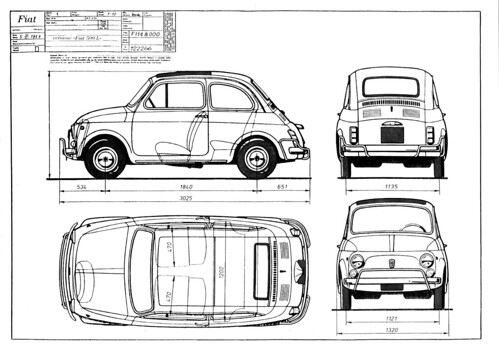
A car’s structure helps it function effectively as a mode of transportation. We can look at diagrams and plans for different cars’ structures and what their likely function is (eg. comparing a minivan to a drag racer). But a car is so much more than functional. A car can provoke emotional reactions – gut feelings about it’s carness.
Perceiving is much more than just observation. The smell, feel, and sounds in addition to visual information help us form an entire picture. The car example I described is something we can all relate to. The feeling of acceleration, the smell of the gasoline…each adds to how we experience a car. The same can be true in the classroom.
Biology is a collision of abstract and concrete. If our metabolic processes were to shut down – an abstract idea to students – we would die in very concrete terms. Unfortunately, in many classrooms – mine included – the reality of concrete biology is lost due to the hyper-focus on abstract ideas. Students only see life as described through a textbook. Michael Doyle is a biology teacher in New Jersey who often writes, “stuff is stuff…nothing can change that.” Even though that stuff is very small, it’s still there, and our students need to experience it in new ways.
Diagrams and models are important, but there’s a lot more to things that what we see at first glance.
We cannot focus our attention unless we know what to look at and how to look at it.
Sparks of Genius, p. 42
There's a concept in biology which says that structure and function are inextricably linked. In fact, you can boil down any part of the study of life into looking at the structures of plants, animals, insects, cells…even molecules – and analyzing what they do in their environment. For instance, the structure of DNA – repeating nucleotides in specific sequences – makes it uniquely adept at storing information. Structure and function.
Much of biology is done with our eyes. We have to look at a structure or observe a behavior in order to find the links. Analytical tools and measurements are a key components of studying living systems. Smell and hearing also play a major role. If you talk to an ornithologist, most of the identification they do in the field is based on the bird's song because seeing them through dense foliage is difficult.
Rather than discussing biology, let's use a more accessible model: a car.
Cars are described all the time with terms like “horsepower, “average MPG,” and “torque.” You can look up specs, schematics, and plans online for the newest models. Top Gear, a top-rated British television series specializes in reviewing luxury and performance cars each week (among other things).
Let's get visceral.
Perception is more than seeing what's in front of you.
Loops
When I got into coding, loops were one of the more difficult tasks for me to get the hang of – especially iterating through conditions. Part of my struggle is that I made my loops too complicated…I tried addressing symptoms, not the overall desired behavior.
When I jumped into the Noughts and Crosses game, my algorithm was seven or eight steps long…I tried to account for each potential play as a ladder. Needless to say, I lost a lot of games. So, I simplified. I cut some steps. And lost again.
In college, a friend of mine was programming his own tic tac toe game as part of his CS master’s program. He explained the tree his program would use to make the best possible move. In it’s final state, it would always win or draw…never lose. To make it more interesting, he added a line to create a mistake at a random interval. It at least gave the human player a chance to win.
I came across an article explaining the Minimax algorithm. In short, it looks at a game state and finds the path which leads to a win or a draw. At the same time, it assumes that the other player wants to make us lose. It sounds confusing, and it certainly is, but the article linked did a great job explaining the principles. Ultimately, computers can be good at Tic Tac Toe because it can quickly build a move tree and execute the path to the best result.
Algorithms
I went back to Naughts and Crosses and took another stab. What was my desired goal? It wasn’t to win…I couldn’t win for two reasons: the game’s AI was probably using the minimax algorithm, and 2) I play second. It’s a significant disadvantage because I only get four board spaces while the opponent gets five. If I can’t win, I can try to force draw. I was able to make a simple program:
- Always make sure I don’t lose. Block the opponent’s three-in-a-row first.
- If they aren’t going to win, can I? Go for three in a row.
- If I don’t need to block, and I can’t win, just pick a free space.
Changing my approach was immensely helpful, because I didn’t have to worry about “what if?” moments. It finally clicked in my head – establish a general choice and iterate down the list to match your case. The algorithm I picked wasn’t perfect – I still lose about 30% of the time, but it’s much better than my earlier attempts.
Headaches
I like to tell myself that I enjoy thought problems. They get in my head and I have a hard time focusing on things. I’ve also learned (as explained above) that I need to keep it simple.
The Suitcases took me a while. Rather than writing it out, here’s a diagram of my solution:

I found the Pancake puzzle to be easier, probably because my daughter plays with stacking cups and blocks. I was able to get them ordered from largest to smallest in five flips.

The hard part of this task wasn’t finding a solution…it was to find a solution in the most efficient way possible. It’s easy to come up with an answer or a method, but that doesn’t mean it’s the best way to accomplish the task. To be totally honest, I wish the prompts hadn’t given as much information as they did. Once I knew what path to head down, I felt like I was stuck in one mindset. With students, we always face the danger of leading with too much information and boxing in their methods. Problem solving needs to have an ebb and flow of success and failure. The challenge is supporting students through the process of failure rather than labeling their work as a failure. There’s a major mindset difference, and it links back to Computational Thinking as the process of problem solving.