Posts
I'm having a hard time turning my brain off this week. Nothing school specific, but I feel like I can't just relax. I feel like I should be doing something but it's like I can't recognize that resting - reading, listening to music, etc - is doing the resting.
I fell into the productivity nexus several years ago. I think it was a symptom of not having a teaching position and needing to be able to justify the work I was doing. I tracked all the things, figured out oblique systems to plan out and quantify my hours of time spent on whatever I was doing.
Now that I'm back to teaching, I realize how much energy I spent on tracking and how little effect I think I actually had. I'm in a new district, teaching, and my to-do list lives on a legal pad. I look at that old district and I feel like I wasted several years of opportunity to actually make meaningful differences with people, not just my time ledger.
Original Link
I've never looked at Rust, but I'm aware of why it is so well liked. My Python projects are all for my own enjoyment, but I feel like these patterns are things I can learn to use just to make my own code cleaner. I've got the tab open on my phone and I'll come back to it when I do some more work on the backend here to finish up some stuff that needs polishing.
I came across a post this morning on why AI isn't killing learning. Educators are good at the blame game and I think the overall premise of the post is correct - we need to constantly revise what we do along with our methods, but that's standard practice, not just in response to new tech.
I think he missed the point on skill building, though. I cannot just look at a series of prompts a student gives an LLM to determine what they know or don't know. There is still a place for fundamental knowledge and building skills to develop fluency.
Three books finished in November! A marvel of reading during the school year. I even managed to read and retain some nonfiction this month.
Terrestrial History: A Novel - Joe Mungo Reed
I enjoyed this a lot. It spans four generations and takes plenty of time developing each narrative. I don't think I read it quickly enough, so I had to keep refreshing myself of who was narrating at a given point and what had happened to them so far.
It's a time travel story but not in a heady sci-fi way. I had to think about the ending for a while because it wasn't until the final few pages that everything really clicked for me.
Grizzly Confidential - Kevin Grange
Kevin Grange is an outdoors person, but terribly afraid of bears. This book is his journey to learn more about the American brown bear in order to overcome his fears. His writing takes him all over the northwest United States to see, learn about, and be with wild grizzly bears. He talks with scientists, teachers, field researchers, and other field experts and shares his experiences in an easy to read, enjoyable way.
What he finds is that if we, humans, are predictable and controlled, experiences with bears can also be safe, predictable, and controlled. Much of the human-bear problem interactions are due to human behaviors. By living in a way that is bear friendly, there is no reason for bears and people to come into conflict.
The Feather Detective - Chris Sweeney
Roxie Laybourne lived at her lab table after growing up through the great depression and entering academia as a woman without a PhD. It didn't matter - she became the world's leading expert in bird identification based on feathers alone. Her expertise was under appreciated for much of her career and, only near the end, did she get the recognition she deserved.
All of her achievements aside, I can't help but think that her life was consistently lonely. She often pushed people to a breaking point because they couldn't meet her work expectations. Those that could rise to her expectations often had the same relational and familial problems in the end. While she wasn't alone in her work, I did feel sad that she couldn't maintain a healthier relational balance in her life.
Heading into December, I threw some books on my list that I happend to find while looking for different books in an effort to broading my reading a little bit. See you in a month!
I had an itch to scratch, so I rebuilt my homepage and built in a new microblogging platform that I'm lovingly referring to as my "otherblog."
The site itself got a facelift - much simplifed and more streamlined. I wanted somewhere to write from a web editor, so I made it how I wanted it. We'll see if it sticks around.
This isn't going anywhere. I may merge the two someday, but that would take some serious URL wrangling to make the schemes work. For now, it's just another spot if you want to keep up with me. RSS is available for your reader.
This has been a while in the making. I built a new CMS within my site using Flask to...well, mainly...let me write online again.
This site is already using Flask for some tasks, but it was done mainly for a graduate school requirement. Since finishing my master's degree, I ripped out a lot of the stuff I had to add and left it pretty much alone. Just about a year ago, I added comments to my static site by setting up a small database here. It works well and I was happy to have that added function.
I've been using Pelican since 2023 for my main blog and I like the static site, but I missed being able to just pop open a form and fire off some thoughts. So, here I am.
I'm keeping it separate for now. Welcome to otherblog.
I'm not sure how long that will be, but it is what it is. It's got RSS set up, so you can subscribe to posts if you want updates.
Much of this new site's layout was heavily inspired by Leon Paternoster. Sorry Leon. Thanks Leon. I hope we get to meet someday.
I finally decided it was time to move away from Nova Launcher. I purchased Nova Prime probably 10 years ago for like $6, so I think I got my money's worth. I wasn't thrilled when it was sold and even less when Kevin left back in September. I just needed to take the time to try stuff out.
I landed on Lawnchair. It isn't as customizable as Nova, so there has been some muscle memory re-training this week, but I'm happy overall. I'm glad they're actively developing and I think it's the next closest fit for me.
So long, Nova. You were good while you were good.
I started toying around with a little side microblog because I miss being able to open a browser and make a post. I've used Pelican to generate this static site for a couple years now and I think I'm ready to move back to a web publisher.
I wanted to try and revive Anchor CMS, but I don't have the PHP skills to refactor something so large. I'm comfortable in Python, so I'm extending my homepage, which already uses Flask, to have a blog path. There's a lot to do, but it's something I can pick away here and there in the evenings. It's fun to rethink this space every now and then. I think this will be a good move overall.
Only one book finished in October, but it was a doozie, so I'm okay with that.
Death's End (Remembrance of Earth's Past) - Cixin Liu
A parallel continuation of The Dark Forest. It picks up with a new main character that you follow through the rest of the book. All of the original themes of Three Body Problem tie into this new narrative while bringing some old characters back to pass on obligations and introducing new ones who bring their own complications.
This was a great ending to the story started in Three Body Problem. Some of the physics got weird for me in the end and there were some ideas teased that didn't get played out like I had hoped. But, all things aside, I'm glad I presed on considering how wary I was after finishing the first novel earlier this year.
My wife's parents are moving next year. She and her dad built a gazebo when she was younger and today, it moved to our house.
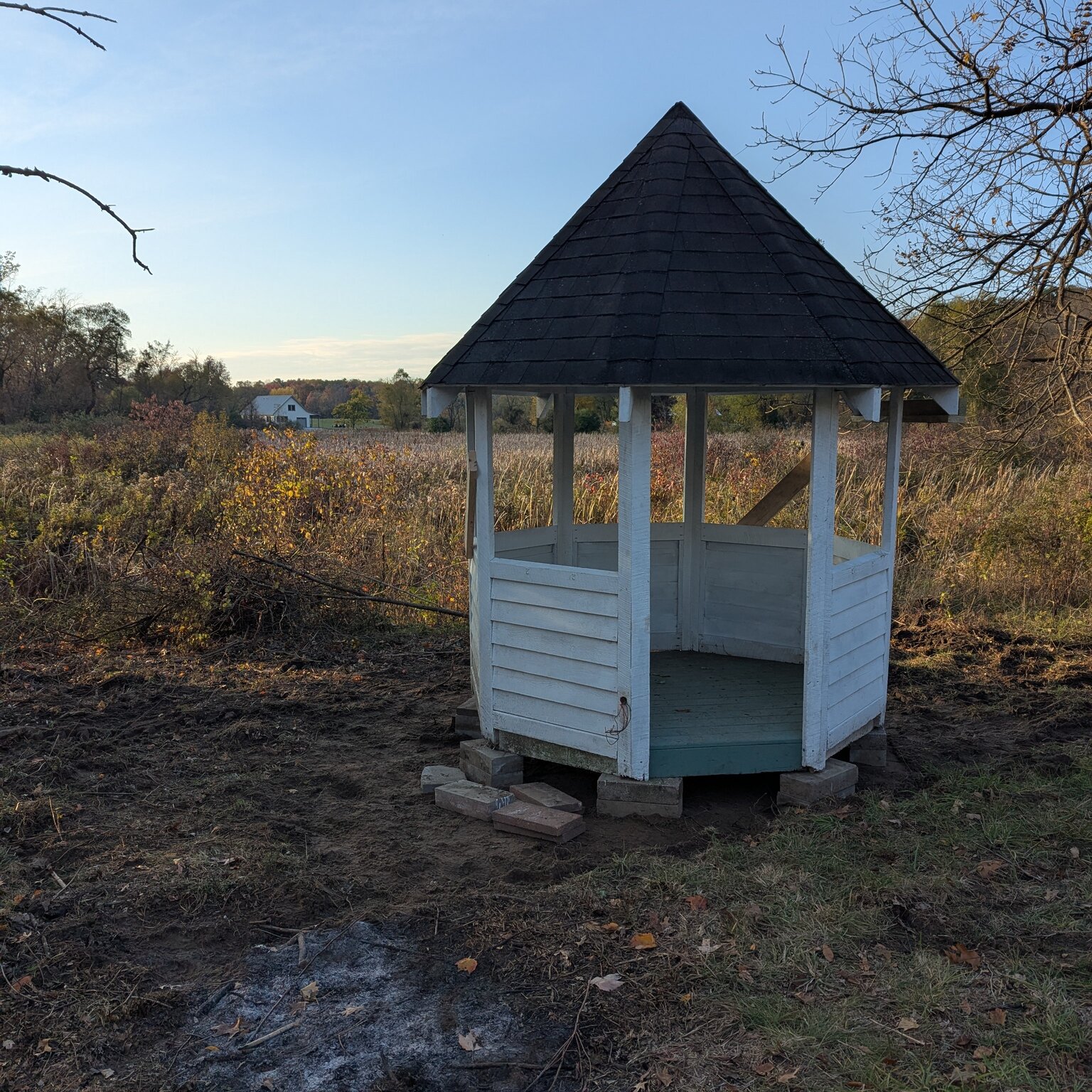
We'll landscape this in and turn it into a nice little weekend coffee spot.
When I moved into my classroom, there was a great periodic table on the ceiling. Some teacher, previous to me, had students research and create posters for elements that were then wrapped on the ceiling tiles to make an enormous periodic table. It was full of color and was a great piece for the room.
Then, we had an insurance audit.
The auditors decided that it had to come down. I didn't have a choice and it came down at the end of my first year there.
Since then, I've been pining for more color and expression. I decided to do my own "adopt an atom" project with students this year and I got permission to have them paint (as a project option) their own cinderblock in my room. They were already a flat white, so it was a ready-made canvas.
Students each chose an atom (no repeats!) and did some research on physical and chemical properties to reinforce the atomic structure work we've been doing. I also asked them to learn about the name origin along with when and how it was first defined as an element. Lastly, they had to learn how it was used or about a curiosity that particular atom has. I got some great projects and students were genuinely surprised at some of the things they learned. Below is a selection of some of the best murals I got last week. Let me know if one stands out to you.
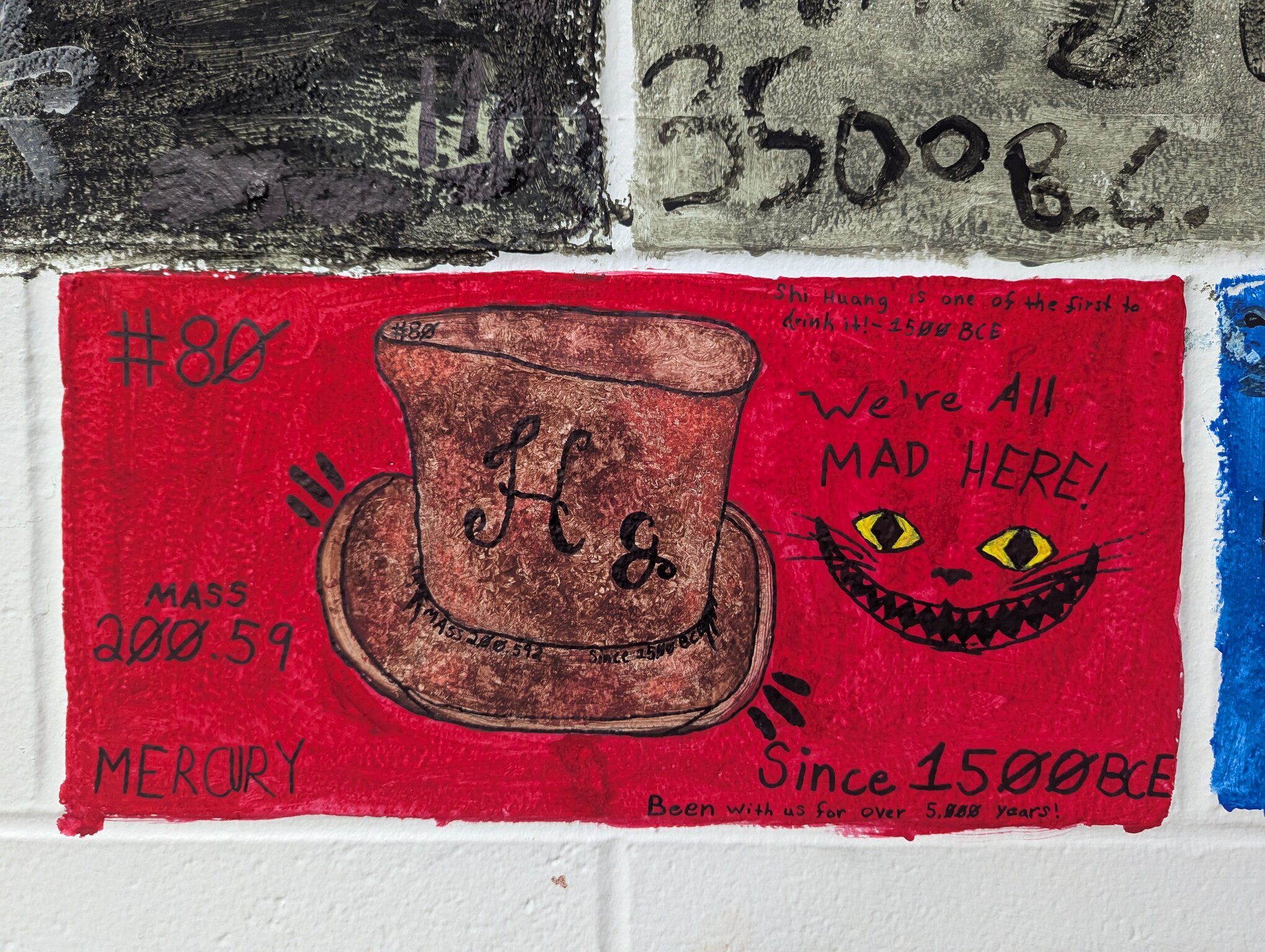
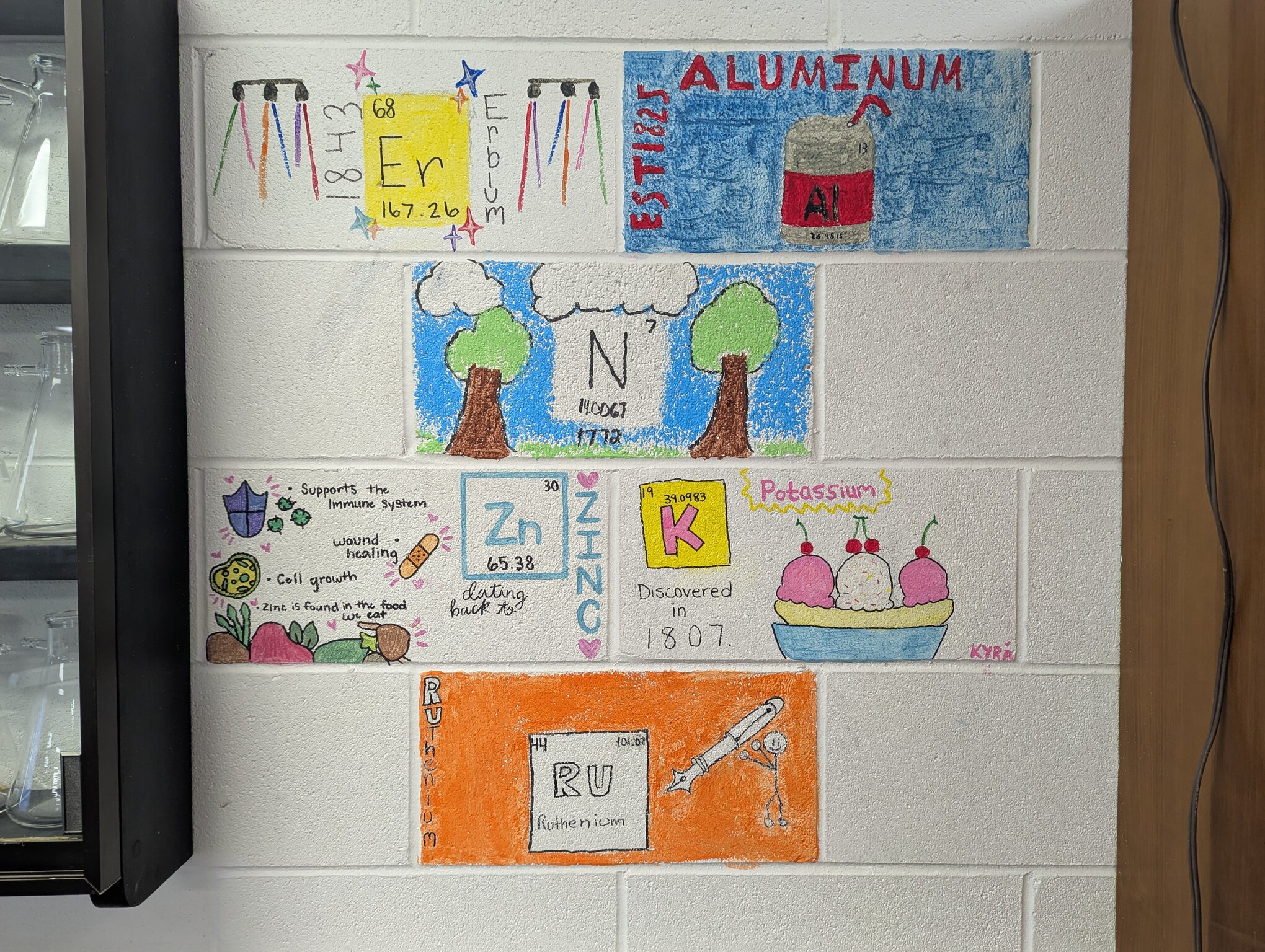
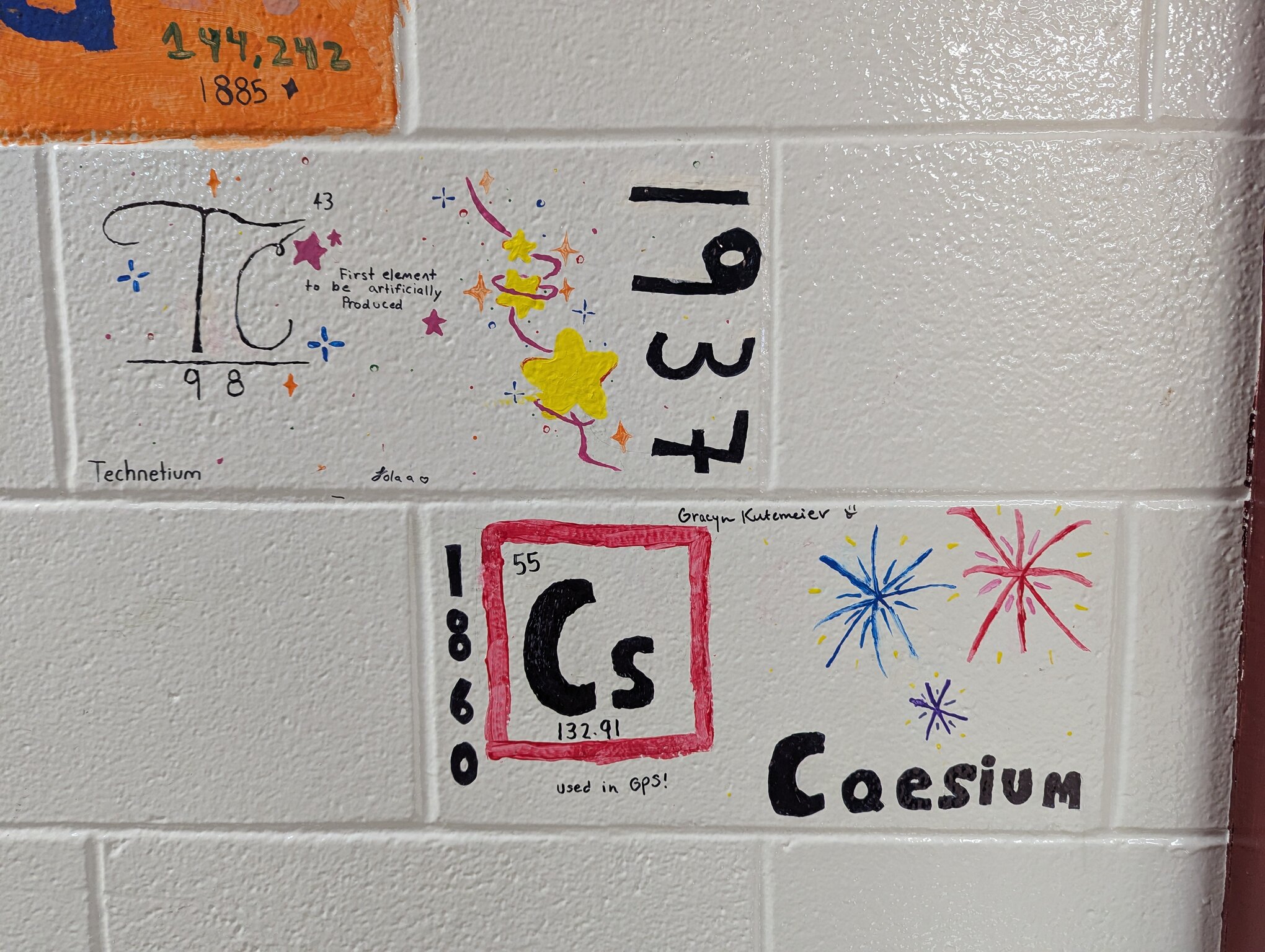
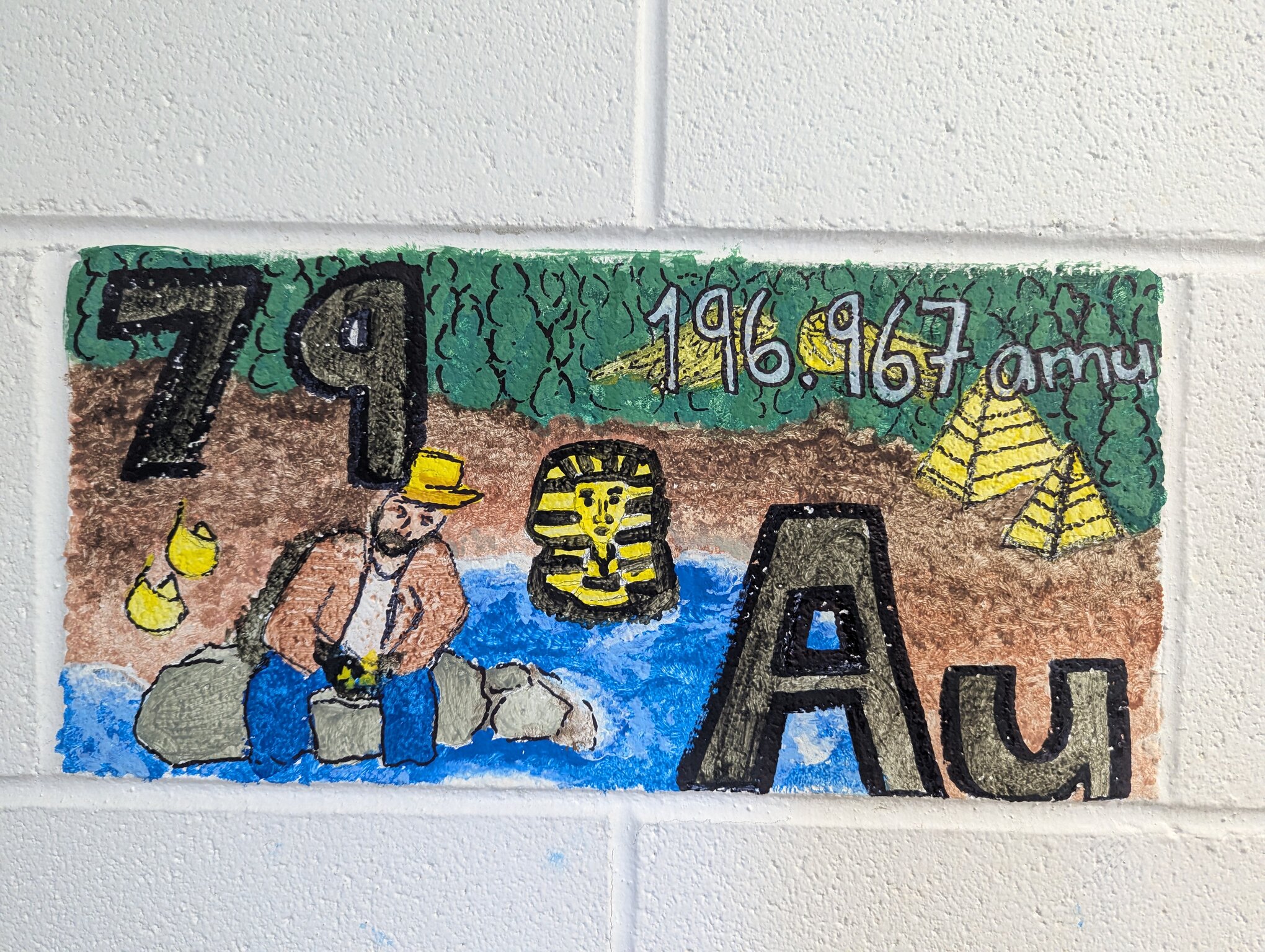
Others were more literal in their translation, but provide just as much visual interest.
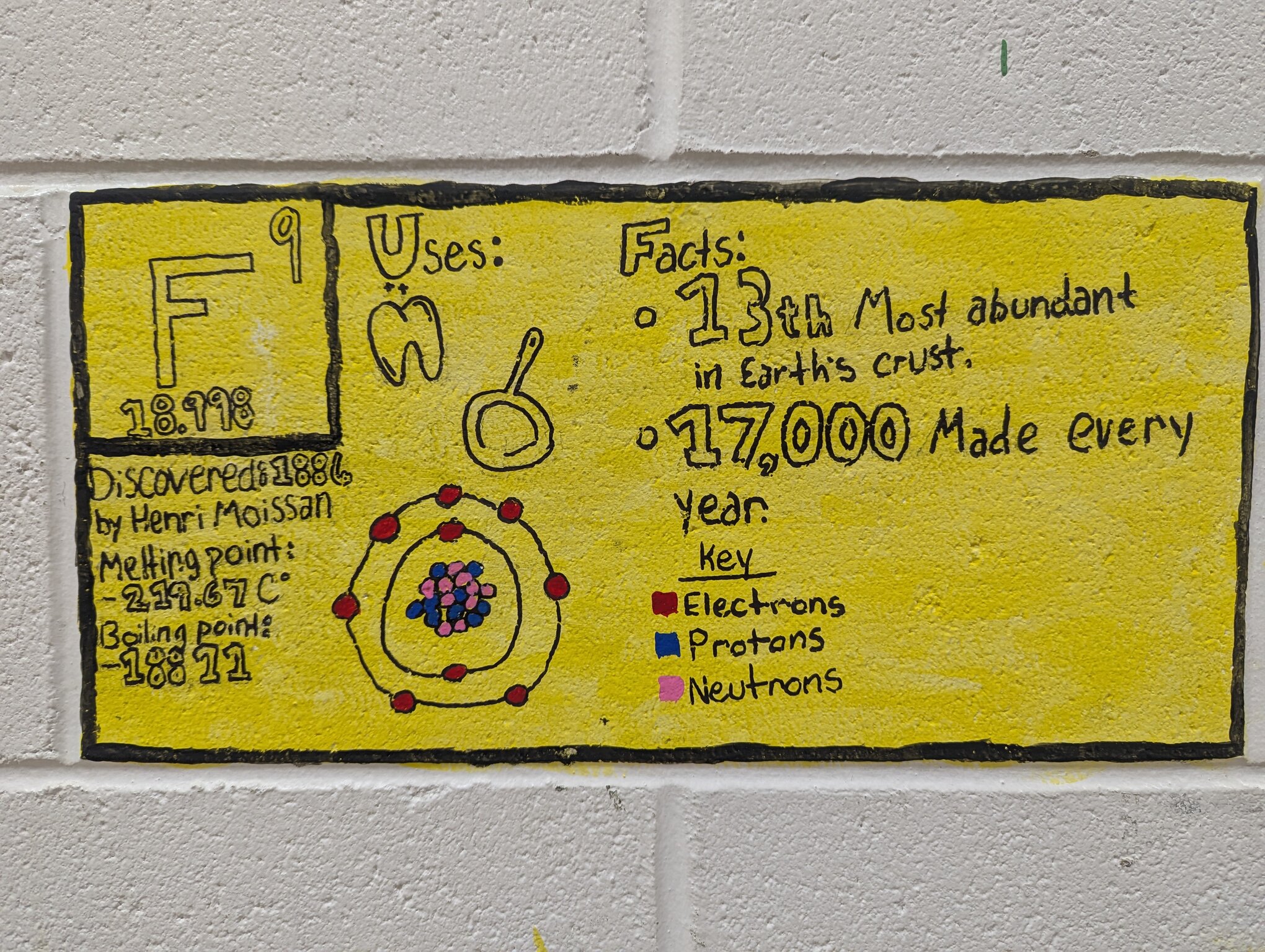
In the end, we were able to do about 30 painted blocks in the room, which was more than I expected. The rest of the students did posters, bringing our total up to about 90 out of 118 atoms described. It went over great and everyone exercised the creative parts of their brains for a change of pace. I'm looking forward to next year's paintings.
Excuse the crummy title. I ran into an interesting graphing problem in Google Sheets that I'm documenting here for anyone else who might have the same question or problem.
We're finishing up a unit on thermochemistry and we're capping it off with a lab where students decompose hydrogen peroxide with an iron nitrate catalyst and measuring temperature change. They collect data for about 20 minutes and then use their data to calculate the enthalpy change for the system. I'm basing this on a procedure from Charles Marzzacco published in the Journal of Chemical Education. His procedure includes a graph of his trial data:
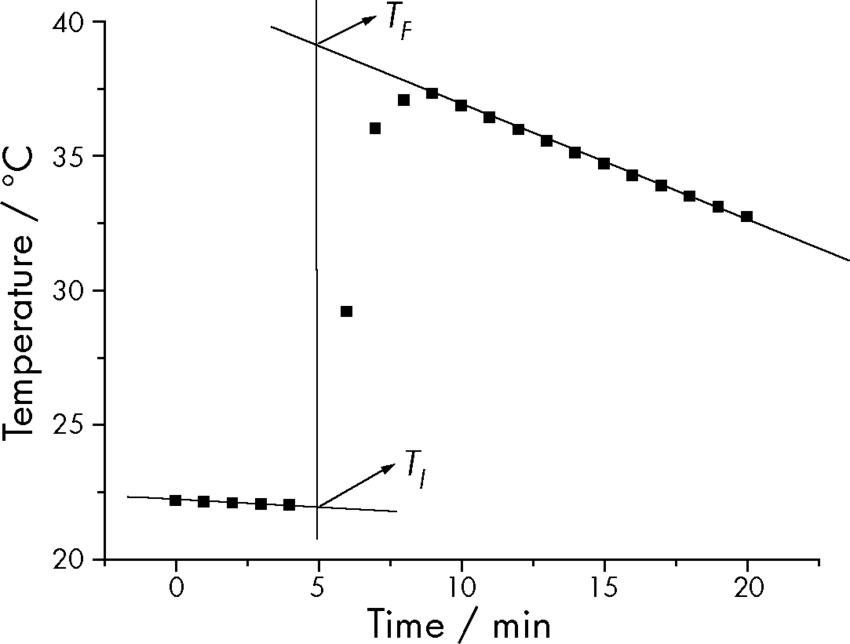
I wanted my students to some more analysis with this lab, so we're going to make the same graph to estimate the maximum temperature of the system following the addition of the catalyst. I'll give me a chance to talk about trends in data, what linear regression does for us, and then calculate their results. The problem is that this kind of regression is not easy to do in Google Sheets. It took some creative use of duplicated data, help from Tom Woodward, and some questionable personal choices.
Here's the graph I ended up with:
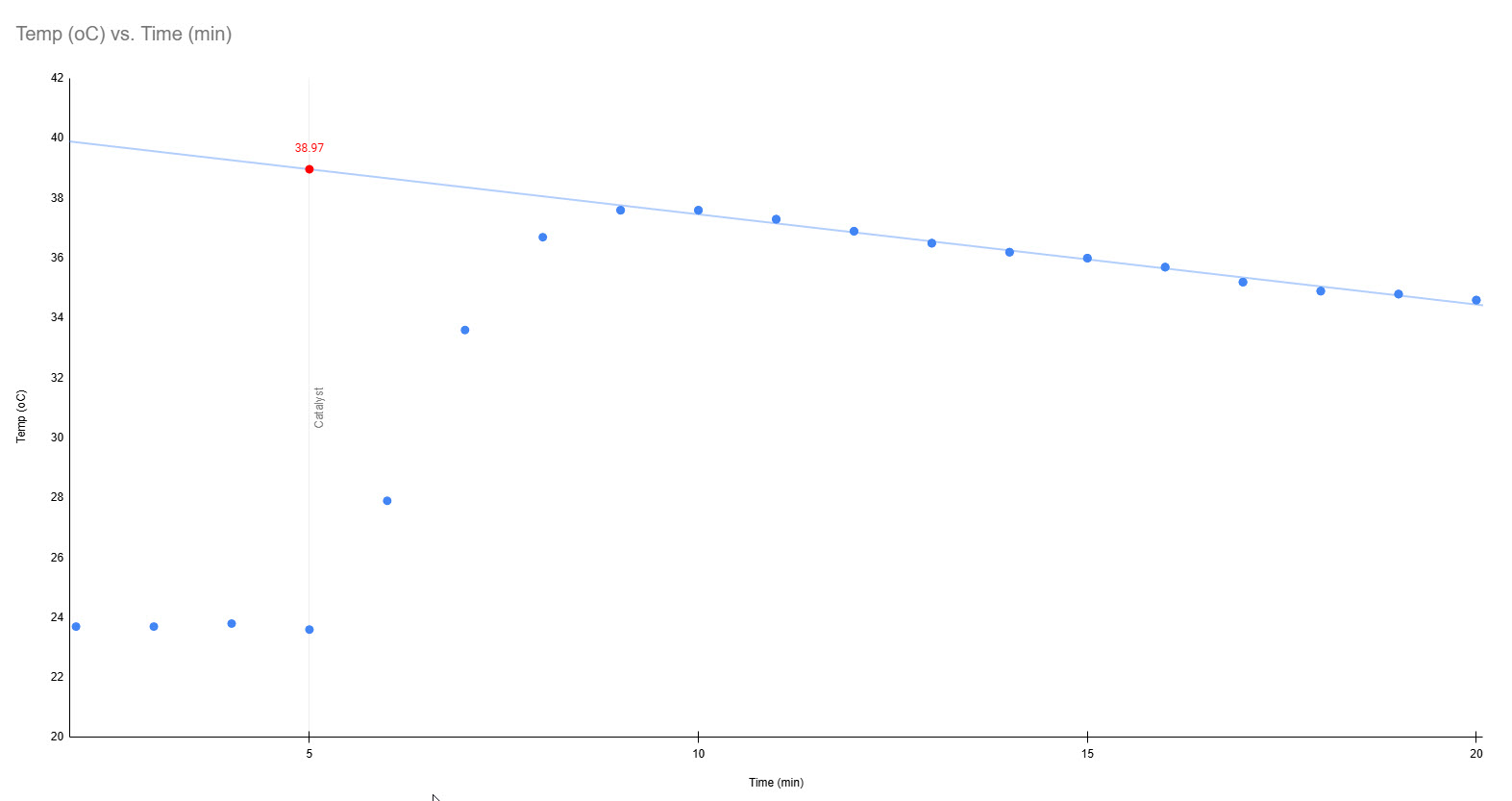
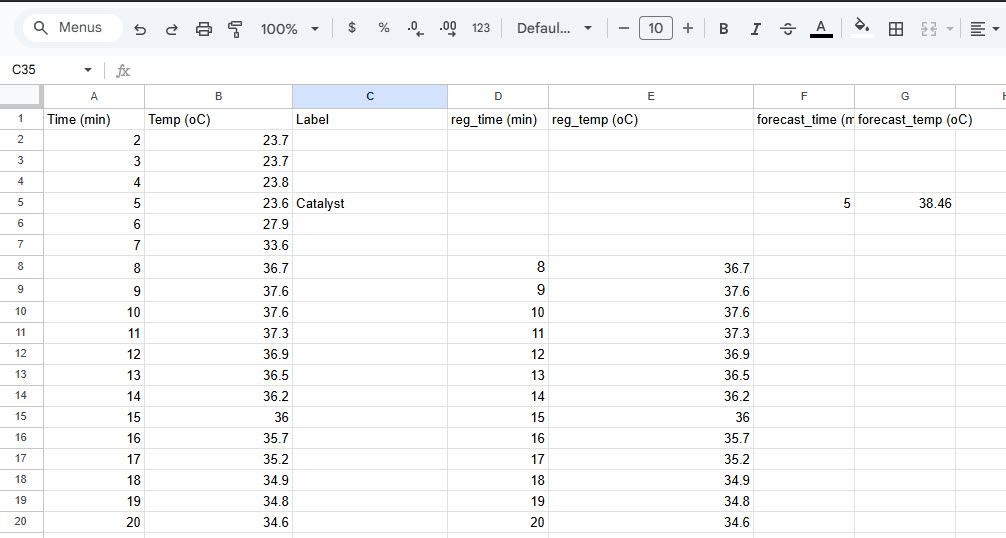
This worked by duplicating a subset of data in the source sheet. The original data is the main graph, recorded like normal. A trendline can be added, but it looks at the entire dataset where I only wanted the best fit from the highest temperature to the end of the run. Tom suggested using a QUERY function to copy data past time n to plot another series on top of the full run.
text
=QUERY(A1:B20, "Select A, B WHERE A >= 8", 0)
My higest temperature was a time 8, so the formula grabs every temperature past that time. This formula has to go in the next column over on the same row as your target temperature. This will add another series to the chart that can be formatted the same as the main line so it is invisible to the user. In the chart editor, this series can have a trendline added to show the trend for the subset.
Finally, I used Sheets' FORECAST function to give it the subset of data to calculate the Y intercept at time n. The formula in this case was:
text
=FORECAST(5, E8:E20,D8:D20)
This goes on line 5 of a third pair of columns to be graphed as a third series as the intercept of the vertical line at time=5 and the regression line. Here's what the sheet itself looks like:
It works, but it's kind of a pain. I'm going to have students graph this one by hand and maybe next time, we'll build some more spreadsheet wrestling time in.
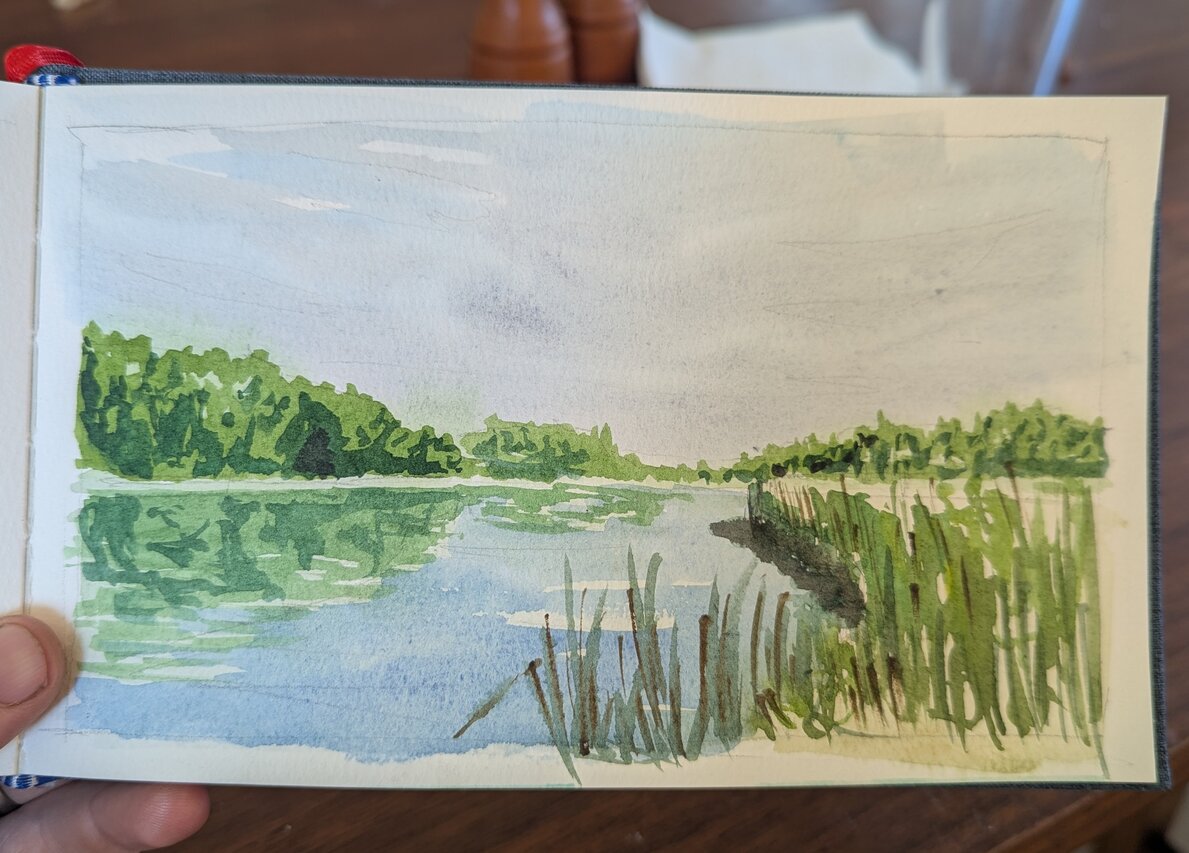
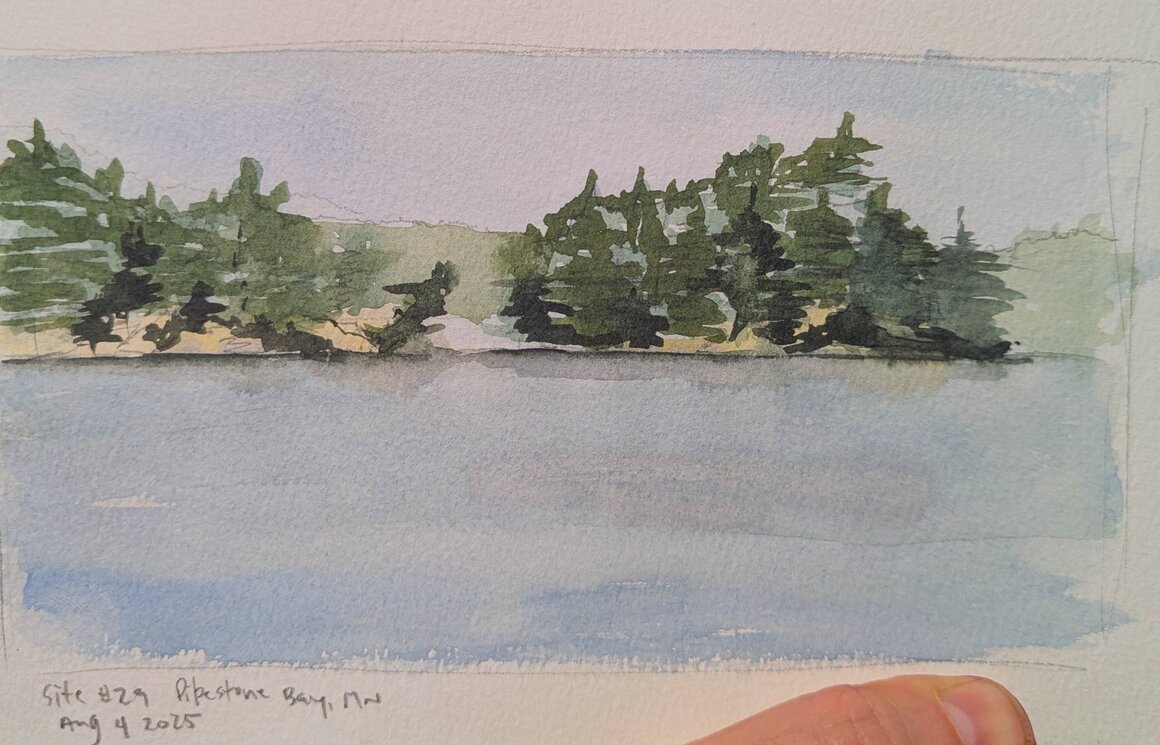
It's been a minute since I've posted about painting, so here are some paintings from the second half of the year.
This has become more therapeutic for me. I'm still finding my style and I'm settling on a technique I like. I've committed to small(ish) paintings so there isn't as much pressure to "do it right." I've also stopped painting on the backs of pages because my wife has asked me not to so she can cut some out from time to time.
In June, we went to visit some friends in Minnesota. They live right on the Mississippi River headwaters, so I took some time to paint while we were there.
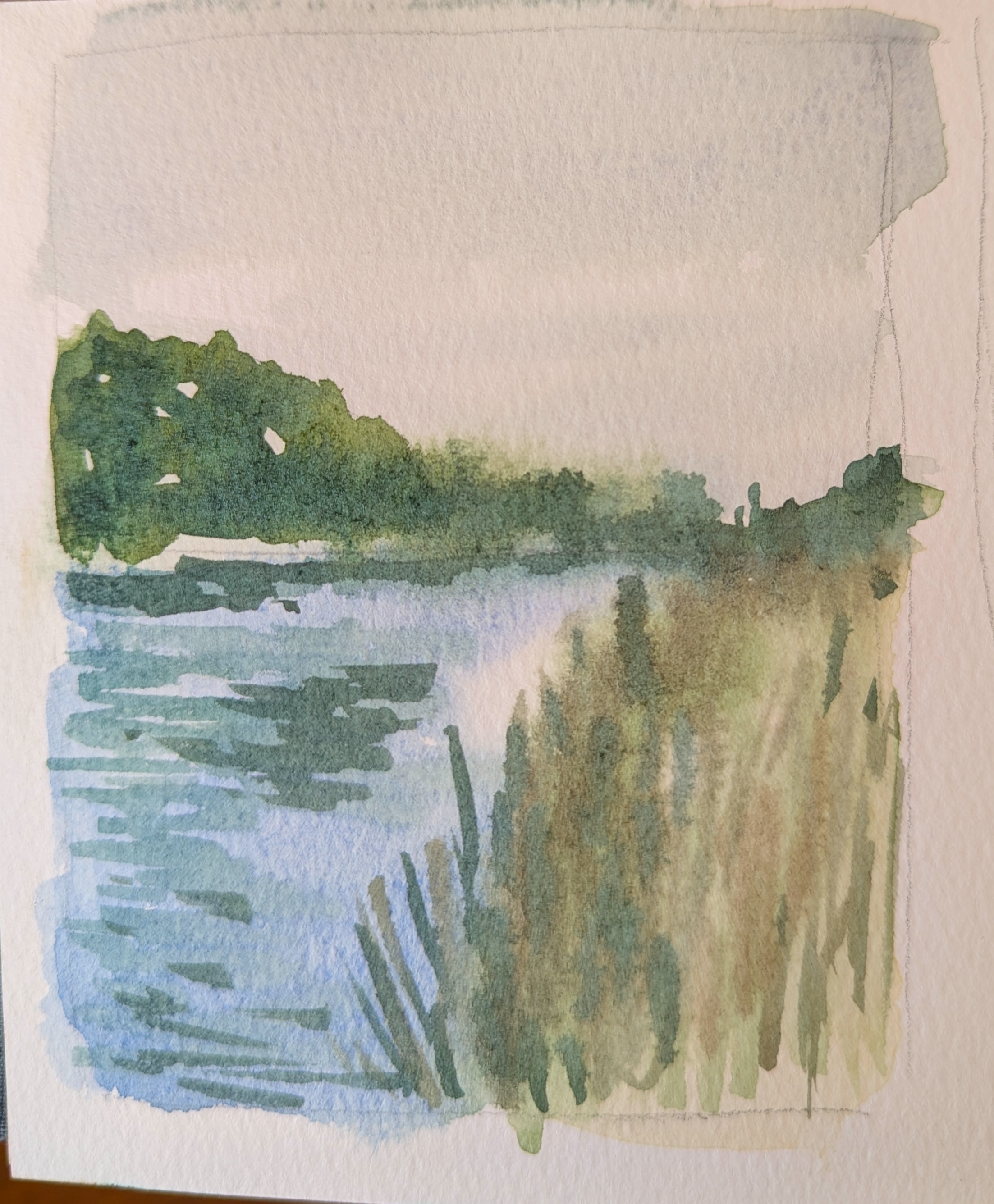
I made some smaller, looser versions while we were there as well.
The time we spent in Minnesota kicked off our summer. You can read more about it in its own post.
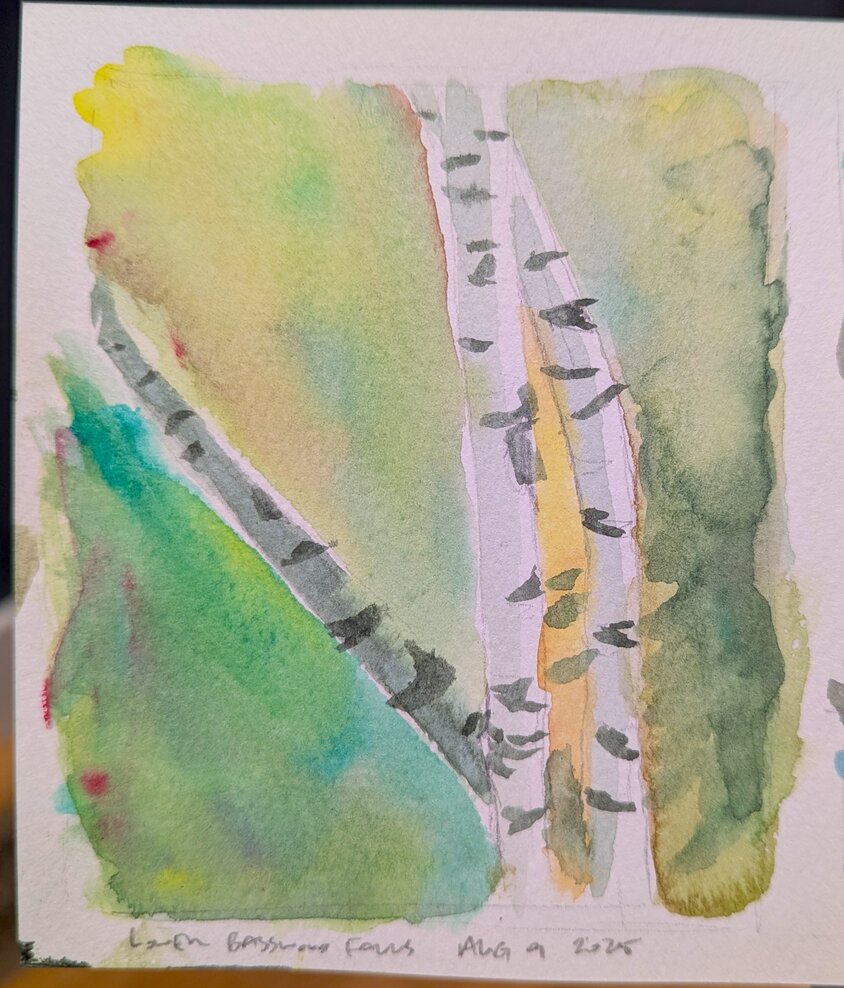
I didn't do much in July, but in August, I went back to the Boundary Waters Canoe Area for a camping trip and I took my paints along.
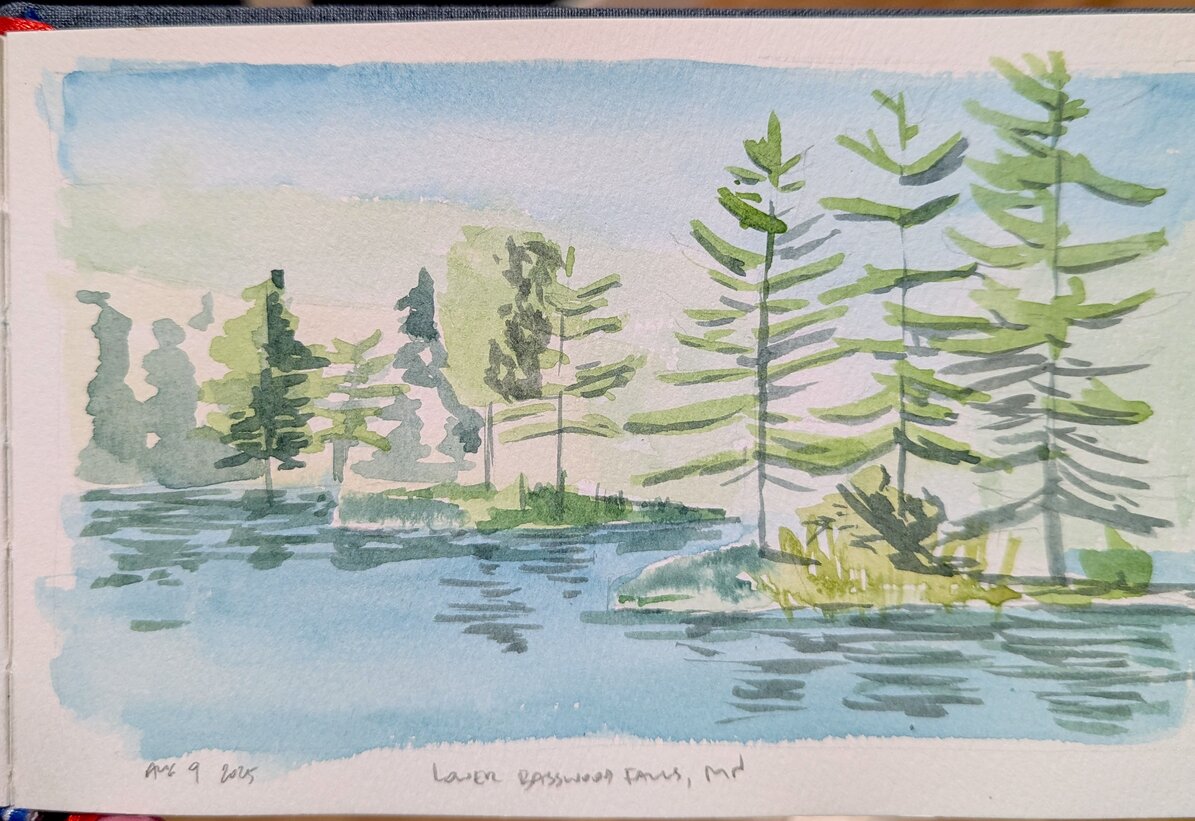

I think my favorite from the trip was this painting of some birch trees near a campsite. Most of what I'd done so far on the trip was flat and hard-edged. I managed to get some nice blending on the background for these birches which makes it feel a little more vibrant.
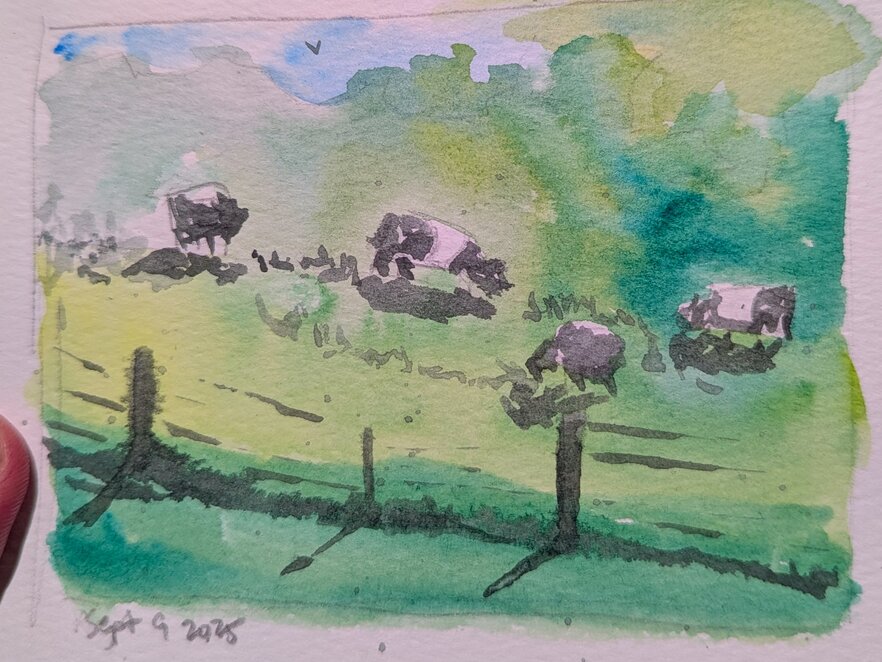
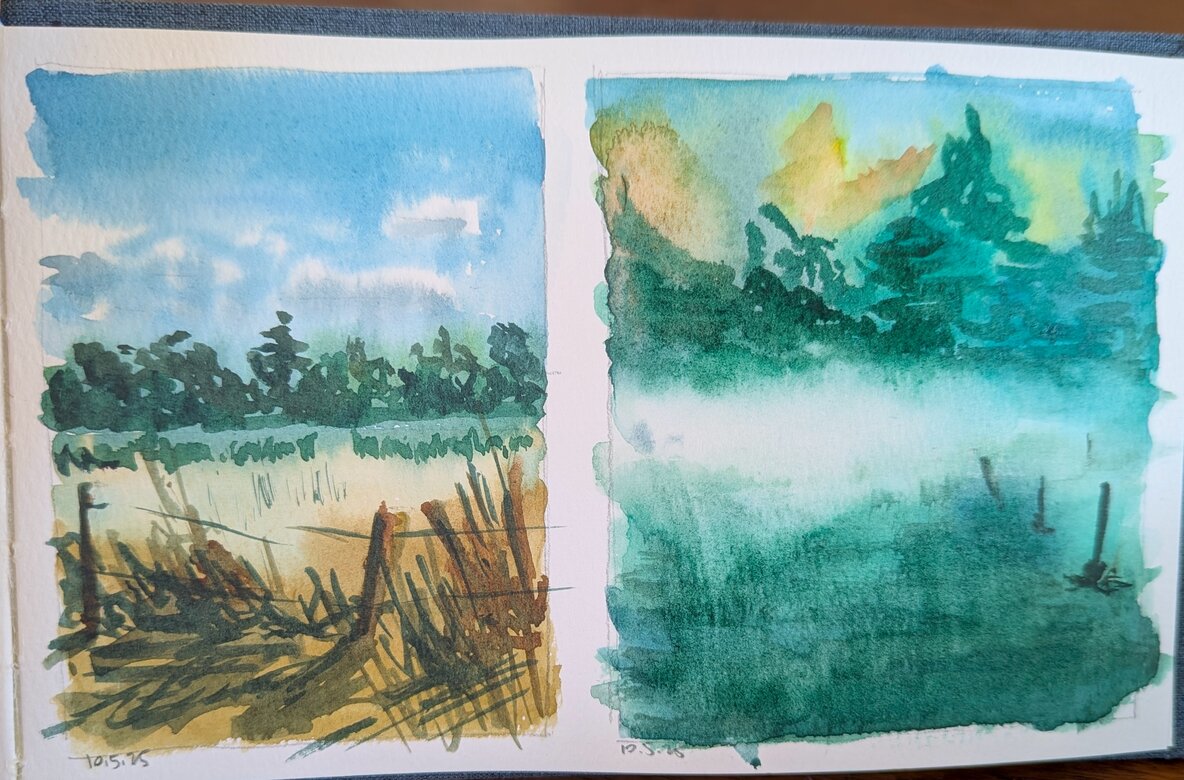
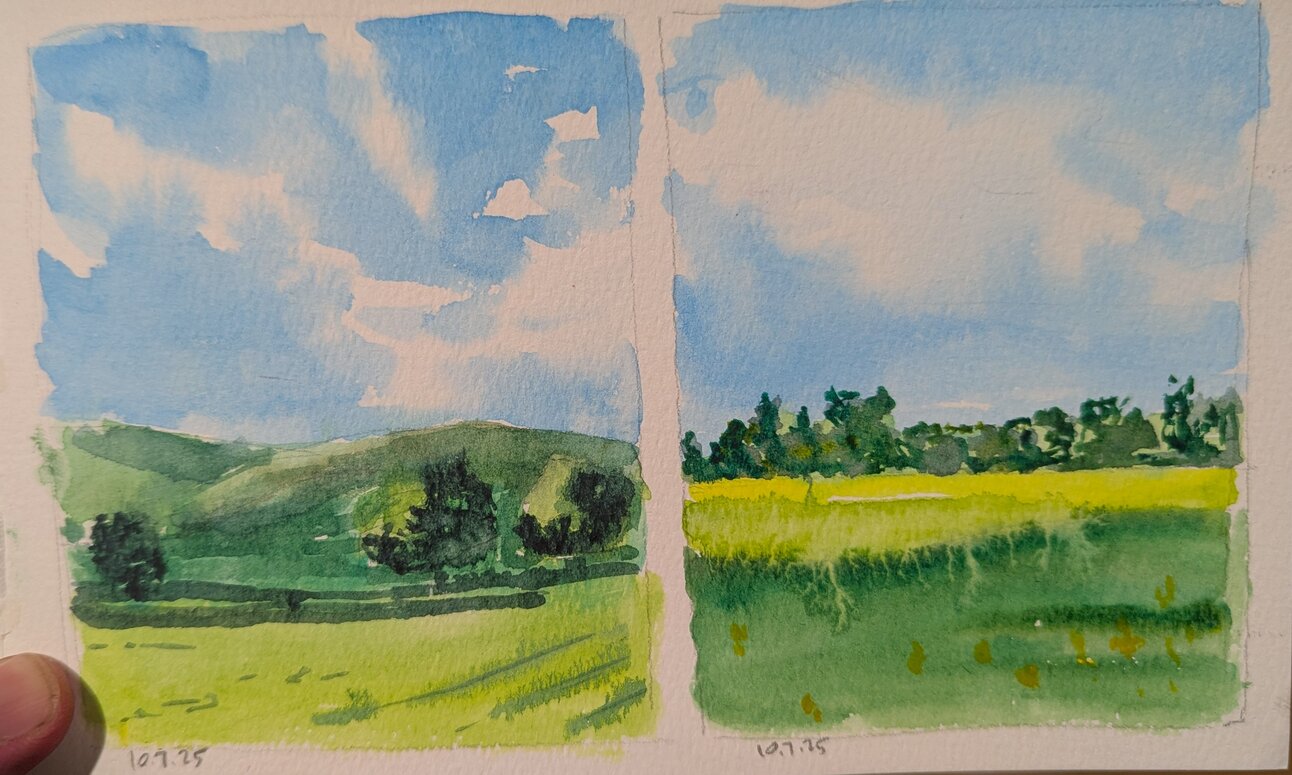
September and October have been small landscapes in the evenings. Some are from home, others are from reference photos.
Warning: this post includes information about raising and processing (ie, butchering) chickens. There are no graphic details, but it does recognize that meat comes from animals which are living up until harvest day.
We are finishing the growing season right now. Last weekend, we had out annual chicken harvest and this week, we've spent a good portion of our time outside, cleaning up the flower garden.
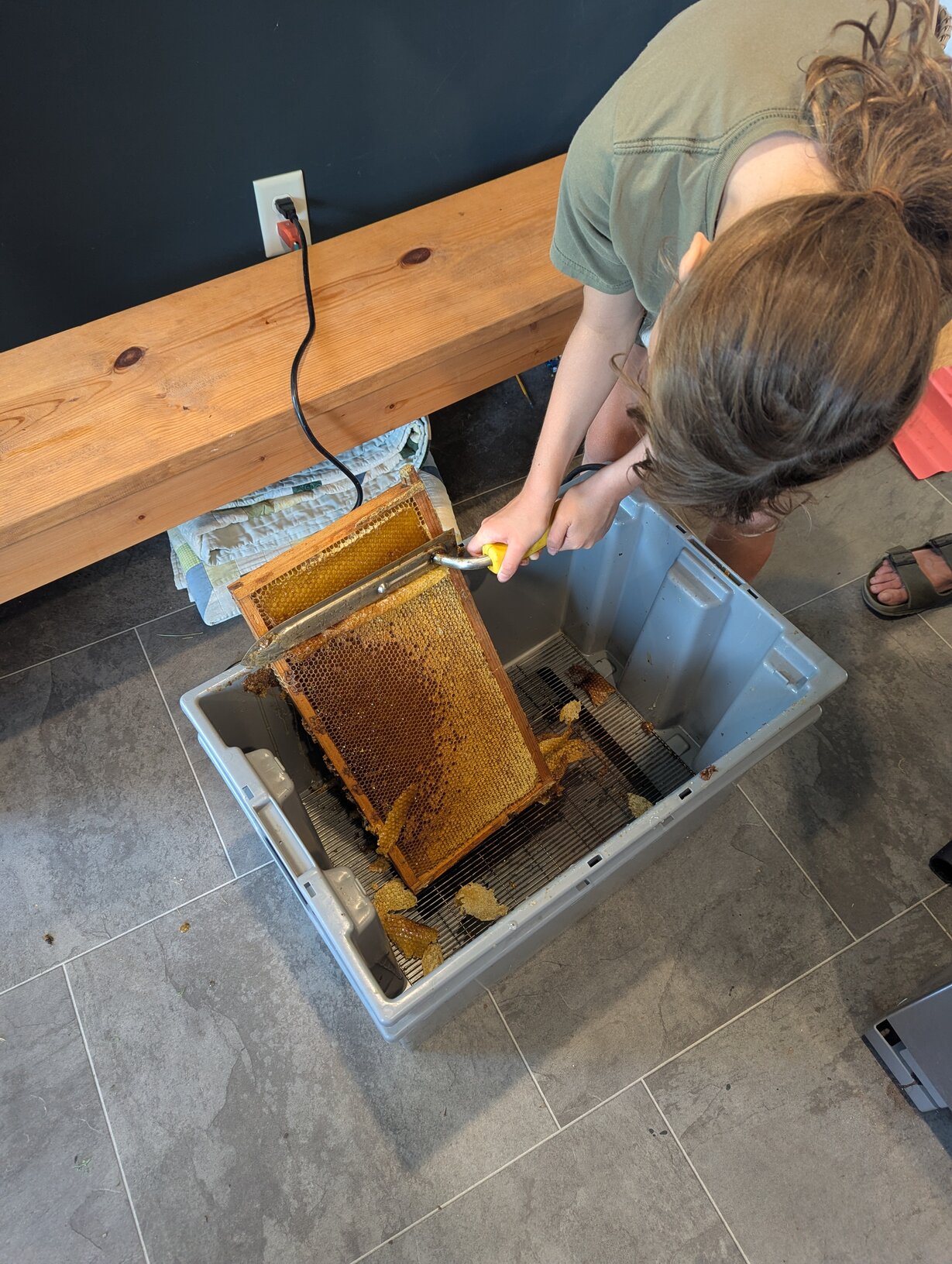
The arrival of October marks the start of the end. The bees are busy drawing down, reducing their numbers, and preparing for the cold winter months. This year, we harvested nearly 400 pounds of honey that went for sale through our farm and some partnering farms locally. All of the hives have received their final mite treatment of the season and will only have a couple more weeks before I put on the insulating covers to get through the winter.
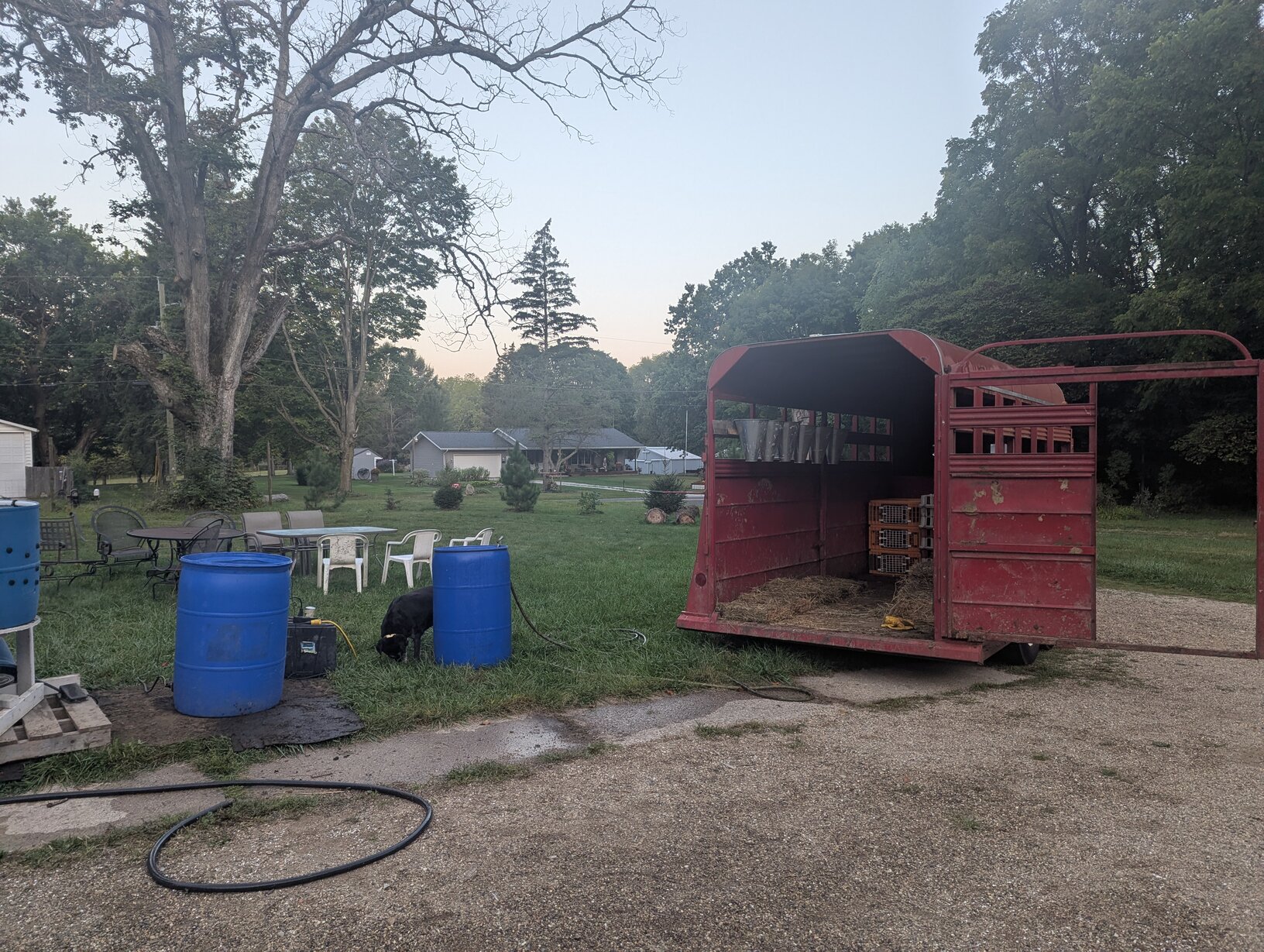
This year has been strange. Normally, our chicken harvest is at the start of October so we can take advantage of cooler weather. This year, our harvest day was a balmy 83 degrees Fahrenheit, which made things a little more sticky than normal. Thankfully, the yellowjackets didn't bother us too much. We worked for two days and got 192 chickens in freezers for four families. Chicken, for as annoying as they are to care for during the hottest part of the summer, are consistently our least expensive protein.
This year, the kids were more into it than ever before. The oldest girls worked hard for several hours. The adults all agreed that we felt the most comfortable we've been. It only took us seven years and seven harvests to get to the point where anyone could jump in anywhere to get things done.
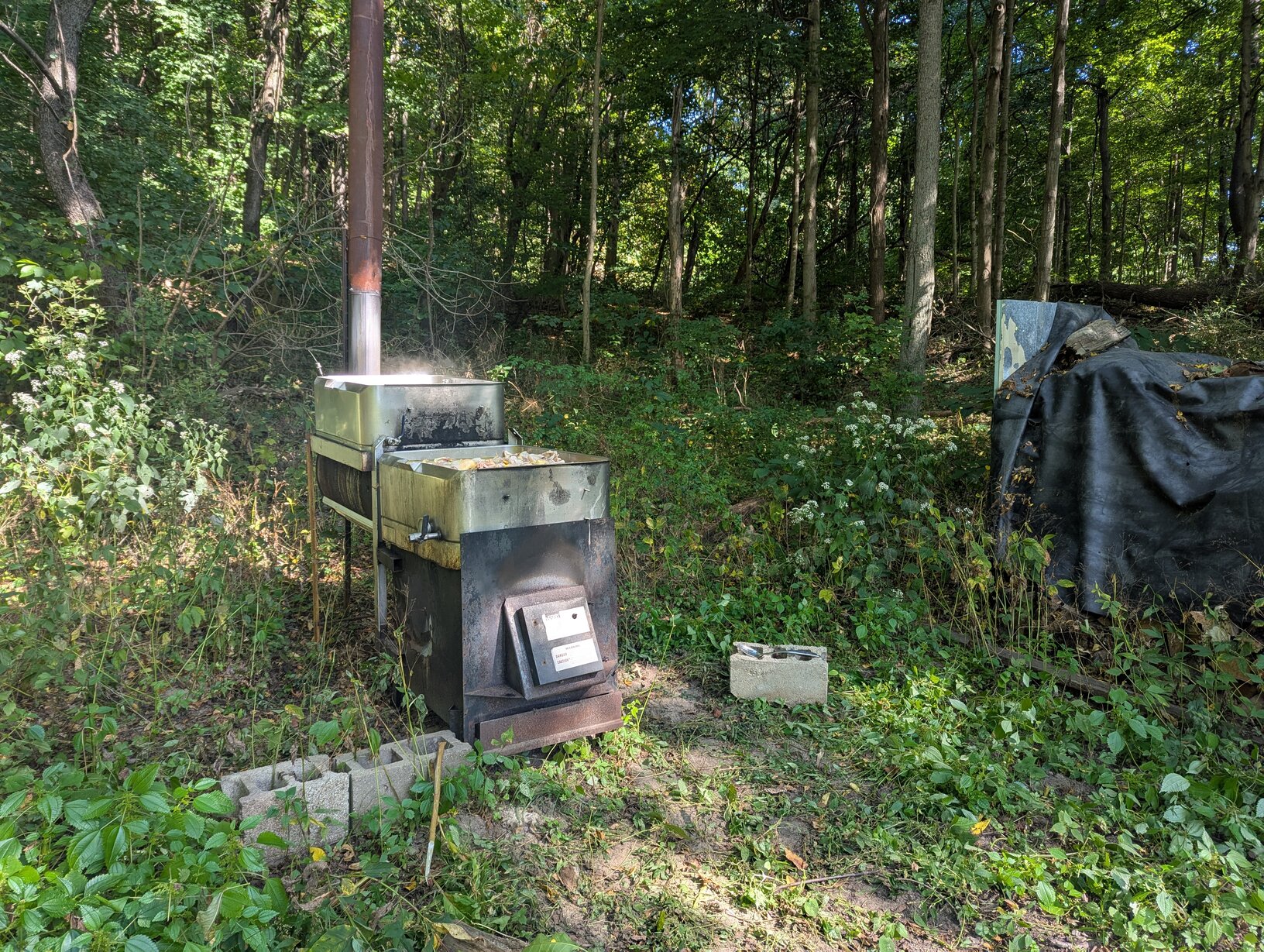
After processing, we use the parts to do a mega batch of stock. This boils for a full 24 hours in the big stock pan on the fireplace. We are able to put nearly every part of the animal into use somewhere. We came home with about 5 gallons of stock. It sounds like a lot, but it will not last us the year. We'll end up making more out of the whole birds we cook during the winter months to keep our supply up for soups.
Our flower garden is also drawing down. We sold far more than we anticipated, which was encouraging. We learned a lot about how to manage a production flower farm and we're planning on expanding next year. The goal is to double the output and share some product with a neighboring farm who wants to offer flowers but cannot spare the growing space.
Finishing fall chores takes a lot of work because we're deep into the school year and tired from the summer months. The days are getting shorter (and cooler, thankfully), so our rest time is coming. We're already looking ahead to a good season next year, but we'll take the time off gladly.
Two books in September. School has started back up, so my reading pace has slowed way down.
The Place of Tides - James Rebanks
his is the third Rebanks book I've read and I enjoyed it as much as the others. He took a chance to live on a duck station island on the Atlantic coast on Norway in an effort to see how people carve out these perfect, isolated lives. Rebanks realizes that this view is a fantasy and that he's missing out on the bigger picture.
The anecdotal storytelling is thoughtful and each chapter brought new insight from the quiet lives of the duck women.
Point B - Drew Magary
I've ready Magary's other books, The Hike and The Postmortal. Those both surprised me in ways that this one didn't. I think this had too many tropes for me to really get into the characters. I don't feel like I connected in any way with the group and it felt forced from start to finish.
That said, the book does explore some interesting ideas in how the world would change if teleportation really were possible. Written in 2020, it foreshadowed the (then, even more so now) tech surveillance that we all live with, whether we like it or not.
I had never seen sideways door handles. My cousin Kristie's Civic felt like the coolest car I'd been in. I wanted it. I wanted to drive a car like it when I finally could drive myself.
A wire snaked out of the tape deck. I hadn't seen that either. We weren't limited to cassettes anymore. Now we could listen to One Headlight from the CD itself.
I wanted that, too. I craved the freedom represented by the Civic.
Michael Pershan had an interesting post on the role of practice software in the classroom. Instead of taking down the various practice apps that promise growth and student achievement with "personalized" practice, he looks at the value of whole group practice, which I am 100% on board with:
I also find teaching to be at its most satisfying and productive when the entire class is pointed at the same target.
This year, my classes have shown exceptional potential to peer-teach. The personalities have magically been very well balanced and I see so much potential in the shared-practice moments when we're working on whiteboards.
This is dynamic. Depending on how students answer, I’ll change the questions they’re served. Look at me—I’m the algorithm. And I’m getting an enormous amount of information from the kids, though thank god there’s no teacher dashboard.
Less dashboard, more whiteboard.
I realized that I never wrote a June reading blog post, so here it is three months late.
Classic Starts: Peter Pan - Tania Zamorsky (Adapter)
This was a modified version of the Peter Pan story by JM Barrie. It was approachable for the kids and they were able to hear the original plot without too much old English getting in the way.
Magician: Apprentice - Raymond E. Feist
I first read this book years ago. On a re-read, I remembered feeling like the first third followed The Lord of the Rings formula closely - elves, dwarves, forests, mines. Then, the story picks up its pace and falls into it's own unique plot. The tension is relentless as characters are split and the danger levels rise. The book ends with a huge cliffhanger and made me want to find the next book immediately.
Midnight in Chernobyl - Adam Higginbotham
I teach Chernobyl in my chemistry class each year and I should really just read this book to my students. Higginbotham goes into wonderful detail about what happened in the accident and why from the technological and the political angles. The conflict between the Soviet apparatus and the engineers on site brought tension through the whole narrative. This is absolutely worth reading.
Harry Potter and the Prisoner of Azkaban - JK Rowling
Another read-aloud for the kids. I think this is one of the better books. Lots of interwoven plots that all build up into a good finish. My kids were enraptured during the rescues of Buckbeak and Sirius.
Four books finished this month.
Magician: Master - Raymond E. Feist
The second half of the original Magician novel is incredibly powerful. It follows the main characters across two different worlds and many years until they come to the climax and have to figure out how to survive.
Pug and Tomas' stories parallel one another and new characters like Laurie and Kasumi add depth to the cultures of both worlds. This really is a fantastic series and this book is probably the best of the series.
Dracula - Bram Stoker
I needed something to read on a camping trip and this was on sale at he bookstore. Victorian literature isn't my favorite, but this felt okay to me. There were still long sections of exposition in the form of journal entries and letters, but I was invested enough in the characters to plow through the descriptive language.
The dread builds quickly from the start, but then tapered off in the second third while everyone tries to figure out what to do. The final third felt fast-paced again as the group put their plan into action.
This wasn't my favorite book, but I can see why it's considered a classic.
Birds Aren't Real: The True Story of Mass Avian Murder and the Largest Surveillance Campaign in US History - Peter McIndoe
I'm starting to become a Truther.
This was a detailed backstory of the US government's bird drone surveillance program, starting with it's inception in the 1950's through the current state as of 2024. It's time to wake up.
The text includes helpful handouts, kids lessons, how to lead your own local Birds Aren't Real rallies, and how to overthrow the US government to finally put and end to the mass surveillance.
If you're not familiar, "Birds Aren't Real" is very much satire and doesn't take long for the schtick to be laid on quite thickly. It was a fun first few chapters, but started to wane in the middle. I felt like I was more or less skimming by the end just to finish it.
The Dark Forest - Cixin Liu
I picked this up reluctantly because I wasn't thrilled with The Three Body Problem. I thoroughly enjoyed this book and had a really hard time putting it down as I worked my way through. It's a more "traditional" science fiction story that spans a vast amount of time while humans work out a way to deal with Trisolaris. The Wallfacer project was compelling and the arc of Luo Ji and others kept me reading. I was unsure about finishing the series after the first book but now, I'm excited to pick up the third volume to find out what happens.